Tag Archives: Road Trip!

PA to PEI – The Plants of a Summer Road Trip

THE TRIP

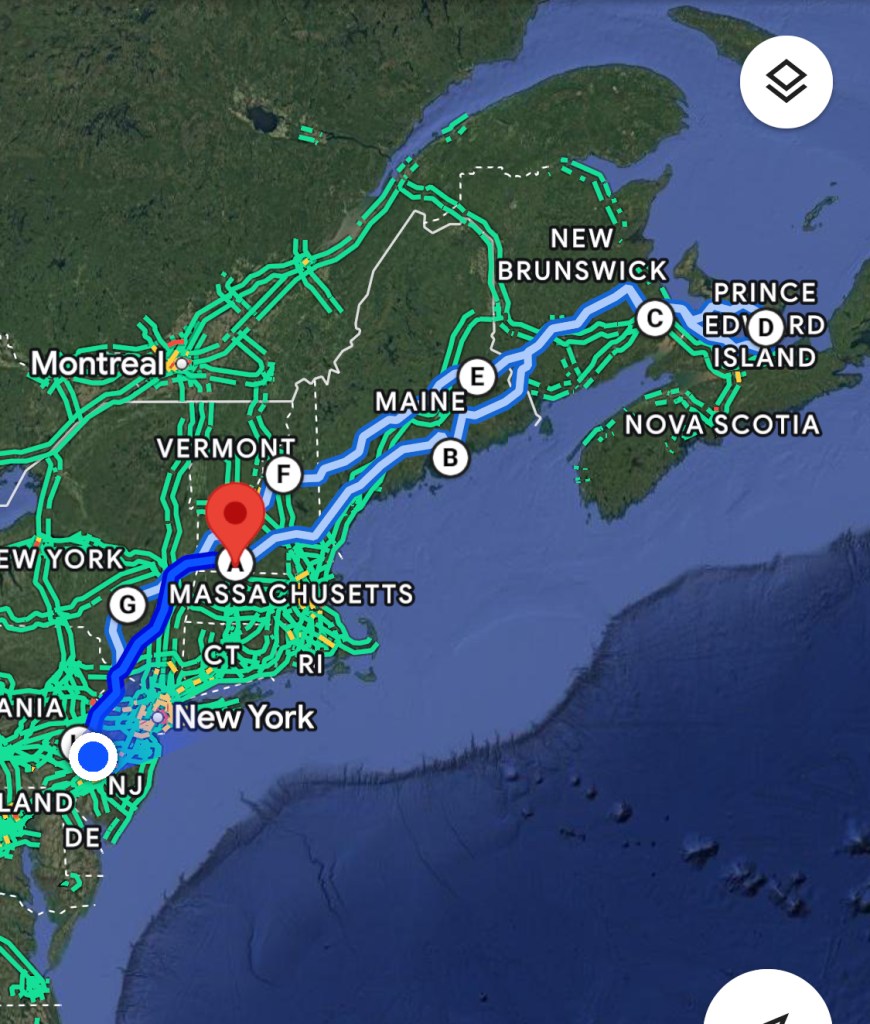
2586 miles in 9 days from Pennsylvania to Prince Edward Island on motorcycles.

No Highways. One toll to leave PEI. Backroads and local spots the entire way. Home-sweet-home while away was a mix of camping, park cabins and old-school motels.

300+ miles and 8+ hours a day on the bikes did not leave much time for exploring along the way. Here are the plants I found on this journey mostly at our overnight stops, discovered during early morning or sunset walks with a hot cup of tea or a local beer, getting some time in to explore, stretch the legs and find all the new-to-me plants and familiar plants in new places I could find before getting back on the seat for another full day’s ride.

THE INSPIRATION

The inspiration for this trip was to see Prince Edward Island and the town of Cavendish, the town the inspired Avonlea, the setting of Anne of Green Gables by LM Montgomery. Due to the nature of long distance travel and limited time frame for this trip I had zero plant-based goals for this trip – no garden visits or hikes planned. My adventure buddy Meghan and I grew up reading and watching and inspired by Anne of Green Gables. 9 year-old me was obsessed with the 1985 pbs series and did not miss an episode. These stories stuck with us into adulthood. The setting of the stories was a bucolic farmstead on Prince Edward Island, based on the town of Cavendish and we decided to make a pilgrimage to see it.

This is a post of the plants I saw along the way.
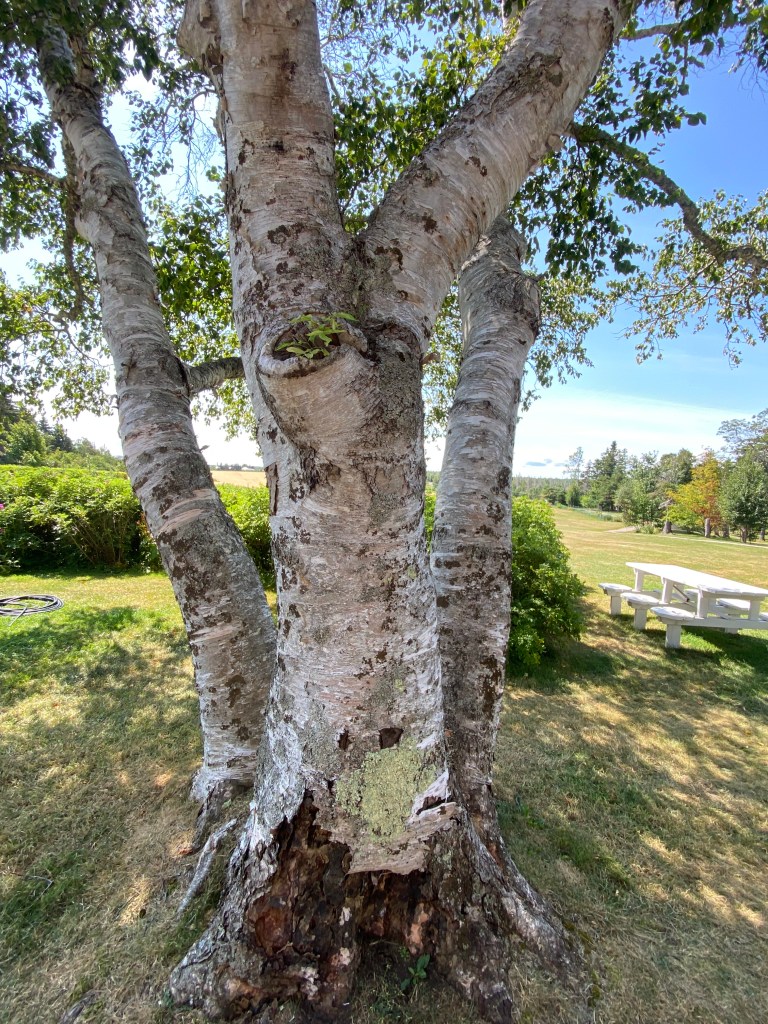
A monster white birch (Betula papyrifera) tree at the site of author L.M. Montgomery’s Cavendish home.
Continue reading PA to PEI – The Plants of a Summer Road Trip

Road Trip – Cascades Trail – North Adams MA

844d5bbc-6e09-4f6d-adc5-03c58c514c0bMy wanderlust is flaring up something serious right now. 45 work days working from home. Today is day 50 of the social-distancing, quarantine, stay-at-home order for the area I live. 50 days! I have watched the end of winter and the beginning of spring as buds swelled and flowers emerged.

I realized quite some time ago that inserting myself into nature is how I cope. When I am sad, depressed, anxious or angry I turn to trails through the woods and the delights of nature to restore my spirits, give me hope and grant me perspective.

My 50 days have not been without connection to nature. I am lucky enough to have a wooded back yard and gardens and live in a rural enough area to be able to see frogs and flowers along my daily walks. But there is no substitute for a good hike along a new trail.

Glimpses of wildflowers or waterfalls, and in the very best cases, both,  are frequent goals of mine on these walks. Arriving to an elevated vista is also something I look to find.

While we are still closed down, though there are murmuring of a slow reopen, I continue to think back to the trails I have explored and making lists of places I want to go.

The Cascades Trail was a funny trail. I followed signs for it along the sidewalk and through a suburban neighborhood. I felt kind of funny traipsing through a quiet neighborhood with my hiking poles and backpack walking past people raking leaves and moving mulch around.

Continue reading Road Trip – Cascades Trail – North Adams MA

Johns Island, SC

Live Oak Leaves
Live oak leaves blanket the floor beneath the angel oak

Recently I was at a going away party for a friend who earned her horticultural dream job out in Portland OR. As a horticulturist, in a region just full of them, there were many of us in attendance. Quickly after arriving, I knew this was my kind of party.

We were sitting around and someone mentioned a ‘horticultural bucket list’. Yes! These are my people! Of course I have a horticultural bucket list. When I said this, the person looked at me and asked if I have ever travelled some place just to see a plant.

I mean, who hasn’t?!

This got me reminiscing about my Easter trip this year designed specifically to check off something on my horticultural bucket list.

For the three day Easter weekend, a special someone and I travelled down to Johns Island, SC to see the Angel Oak. Do you know it? Have you been?

Continue reading Johns Island, SC

Sunken Gardens, St. Petersburg Florida

All things vintage strike my fancy and this garden had me at its sign:

The Retro Sign of Sunken Gardens - St. Petersburg, Florida The Retro Sign of Sunken Gardens – St. Petersburg, Florida

I am thinking of this small gem today as I keep the wood stove burning and the thermometer doesn’t get out of the single digits. Sunken Gardens has been around since 1935 when George Turner Sr. opened his 6 acre property to the public to show off his walled gardens for $0.25 a person. Starting out as a place with a sink hole and a shallow lake, Mr. Turner turned this land into a rich area to grow fruits and vegetable by installing a tile drainage system. He was a plumber by vocation and horticulturist by avocation, Turner’s gardening transitioned from the fruits and vegetables he sold at his road-side stand to exotic flowers and tropical plants.  Turner maintained the gardens, eventually leaving them open year round and amassing a flock of flamingos numbering in the hundreds. Turner’s sons purchased the property from their father and the garden became world famous. Celebrities visited and beauty contests were held there. The gardens went through many changes, a large gift shop (at one time the largest in the world), walk-through aviary, religious exhibits. Due to the construction of a nearby interstate and the creation of large theme parks, this garden, like many others, experienced a decline in audience and an increase in operational expenses that led a discussion concerning closing the gardens. The City of St. Petersburg now owns the attraction. Since 1999 the Parks Department has been operating and maintaing this oasis with great help from an army of volunteers. Right behind this sign is a strip mall and bustling 4th Street. You must enter, and leave (of course) through the gift shop. Modest, I’m sure, compared to the mega-shop of its past, this shop featured locally made and horticulture themed gifts for all ages and budgets. When you park in the lot, you have no idea what’s in store for you. The garden is walled, and even at my height, I couldn’t sneak a peak to see what was inside.

A Tropical View in the Sunken Gardens, St. Petersburg, FL A Tropical View in the Sunken Gardens, St. Petersburg, FL

Continue reading Sunken Gardens, St. Petersburg Florida

Art, Plants and a Historic House: Hamilton NJ

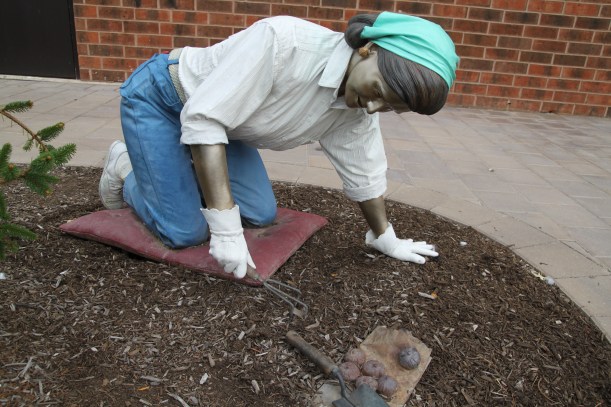
Seward Johnson's Sculpture "Down to Earth" Grounds for Sculpture
Seward Johnson’s Sculpture “Down to Earth” Grounds for Sculpture – Hamilton, NJ

Grounds for Sculpture and Sayen House and Gardens

One of my most favorite trees (and contrary to popular belief they are not ALL my favorites) is the Katsura Tree (Cercidiphyllum japonicum). Typically I focus on native plants and their role in our ecosystem and place in plant communities. I like to explore faunal associations and examine their potential for ornamental use. This tree, native to Japan, captures all of my attention because of its fragrance. Katsuras don’t emit their perfume when flowering like most trees do. Katsura give off the most wonderfully sweet fragrance just before their leaves start to change into their apricot splendor of autumn. The scent is distinctive enough that you will smell it before you even see a Katsura and just know one is around, somewhere.

Fall is my favorite season. We are so lucky here in the Northeast and Mid-Atlantic that we get to experience the changing of the seasons through riotous colors thrown together painting hillsides, roadways and mountaintops. As I look out my window Red Oak (Quercus rubra) leaves are just starting to show the crimson they are known for and the cat-faced shaped leaves of Tulip Trees (Liriodendron tulipifera) are turning golden. The only thing that makes this show better is the addition of fragrance and that’s where Katsura comes in.

I, accidentally, timed my visit to Grounds for Sculpture just perfectly for a stunning sensory experience. The place is loaded with Katsura trees and they were all alerting their presence on the breeze. Sculptures you can get up close to and touch, ornamental gardens and Katsura perfume in the air. I was in heaven. A little early for fall color, but if there was fall color, there wouldn’t have been any perfume on the wind. Some compare the scent to cotton candy, others liken it to brown sugar or a cake baking. In fact, according to Michael Dosmann, curator of living collections at the Arnold Arboretum in Boston, “Germans call this tree ‘kuchenbaum,’ which translates to ‘cake tree’.”


Continue reading Art, Plants and a Historic House: Hamilton NJ

South Haven, Michigan


Lichens on a Michigan Forest  Floor
Lichens (Cladonia spp)on a Michigan Forest Floor

August 26th was Women’s Equality Day.  The articles and news stories highlighting this day and the reason for it got me thinking back to a road trip we took a few years ago. We decided we would head out to Michigan.

When Tree Boy* and I decided we would spend our summer vacation on a Road Trip to Michigan, most people couldn’t understand why we would go to Michigan. We were asked multiple times if we had relatives there, as if that must be a prerequisite for trekking way out there.

To be honest, we had a lofty goal – to kayak in each of the Great Lakes. The way we travel makes some anxious. No plans, no reservations, no place to be at a certain time. We just go and see where we end up. We may investigate a place or two that looks interesting to us, write it down so we don’t forget and if we happen to end up there, well, great! If not, well, that’s okay too.  For us part of the adventure is not knowing what we’ll see or where we’ll end up.  Has this meant sleeping alongside the highway, no access to state parks on busy weekends, sure! Has this meant we stumble upon things we may not have seen during a well-planned, each- minute-perfectly-scheduled-vacation – absolutely!

As we point our van towards Lake Michigan, imagine my surprise as I examine the map – yep, a paper map – difficult to get the big picture on a small screen – and notice a little green mark with the label LH Bailey Museum. There’s only one LH Bailey I know of. The “Father of American Horticulture” Liberty Hyde Bailey. How could a Horticulturist and a Landscape Designer NOT investigate?

Continue reading South Haven, Michigan

About that tree in Brooklyn (or… Adventures in Finding Free Things to Do in the City…)

Lily Pond at the Narrows Botanical Garden

Perhaps you read the Betty Smith novel A Tree Grows in Brooklyn.  {{Spoiler alert}} The tree in the story was an Ailanthus altissima or Tree of Heaven. This tree is known for its ability to thrive in even the harshest of conditions, hence its use as a metaphor for the strength and tenacity of the main character in the book.

“There’s a tree that grows in Brooklyn. Some people call it the Tree of Heaven. No matter where its seed falls, it makes a tree which struggles to reach the sky. It grows in boarded-up lots and out of neglected rubbish heaps.  It grows up out of cellar gratings. It is the only tree  that grows out of cement. It grows lushly…survives without sun, water, and seemingly without earth. It should be considered beautiful except that there are too many of it.” Betty Smith, A Tree Grows in Brooklyn

The “ghetto palm” (as my inner-city high school interns once described it to me) has become a bit too successful dominating roadsides and vacant lots in all but 6 of the states. Introduced from China as an ornamental plant Ailanthus was planted widely throughout the Northeast in the first half of the century. It fell out of favor with the horticultural crowd but despite its lack of popularity continued to insert itself into devoid and neglected areas of our landscape.  In his book Wild Urban Plants of the Northeast Peter Del Tredici asks us to take a different look at these weed plants colonizing waste spaces.  He suggests that these “weedy” and “spontaneous” plants benefit the cities by creating forests and the ecological benefits associated with forests, at no cost to the residents. Hmmm. Del Tredici says these are as important part of the urban landscape as the native plants restricted to protected natural areas and the highly maintained cultivated gardens on display throughout the city.

I am still digesting this point of view as it flies in the face of everything familiar to me. While I appreciate the sentiment, science and statistics, it is still hard for me to promote the embrace of invasive, weedy plant species to the detriment of native plants and the wildlife they support.  As I continue to consider and explore this topic, I visit those highly manicured cultivated garden spaces that are also an important part of the fabric of a city. This trip takes me to Brooklyn.

Continue reading About that tree in Brooklyn (or… Adventures in Finding Free Things to Do in the City…)

Grey Towers National Historic Site

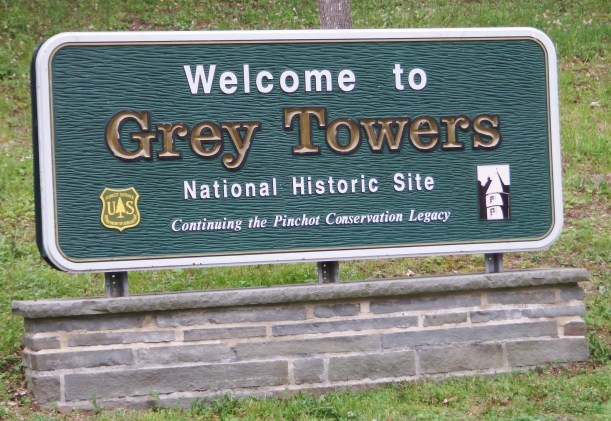
Grey Towers Welcome
Grey Towers Welcome

“Without natural resources life itself is impossible. From birth to death, natural resources, transformed for human use, feed, clothe, shelter, and transport us. Upon them we depend for every material necessity, comfort, convenience, and protection in our lives. Without abundant resources prosperity is out of reach.” ~ Gifford Pinchot

Today I take you to Grey Towers. Have you been? For those of you who aren’t familiar, Grey Towers was the home of Gifford Pinchot. Who was Gifford Pinchot? Twice the governor of Pennsylvania and before that the  first chief of the US Forestry Service. It is said that Gifford Pinchot is the ‘father’ of the conservation movement. Located in Milford, PA, “The Birthplace of the Conservation Movement”, Grey Towers stands upon a hill looking east towards France, a nod to the family’s French Huguenot heritage.  Originally a summer home of his parents, this sprawling estate became the permanent home of the Gifford and wife Cornelia in order to establish Pennsylvania residency so Gifford could eventually run for governor. Conservation, horticulture, historic architecture, politics, a dining room table where you float your food to the guests…who could ask for more from a road trip stop?


Continue reading Grey Towers National Historic Site