Tag Archives: Botanizing

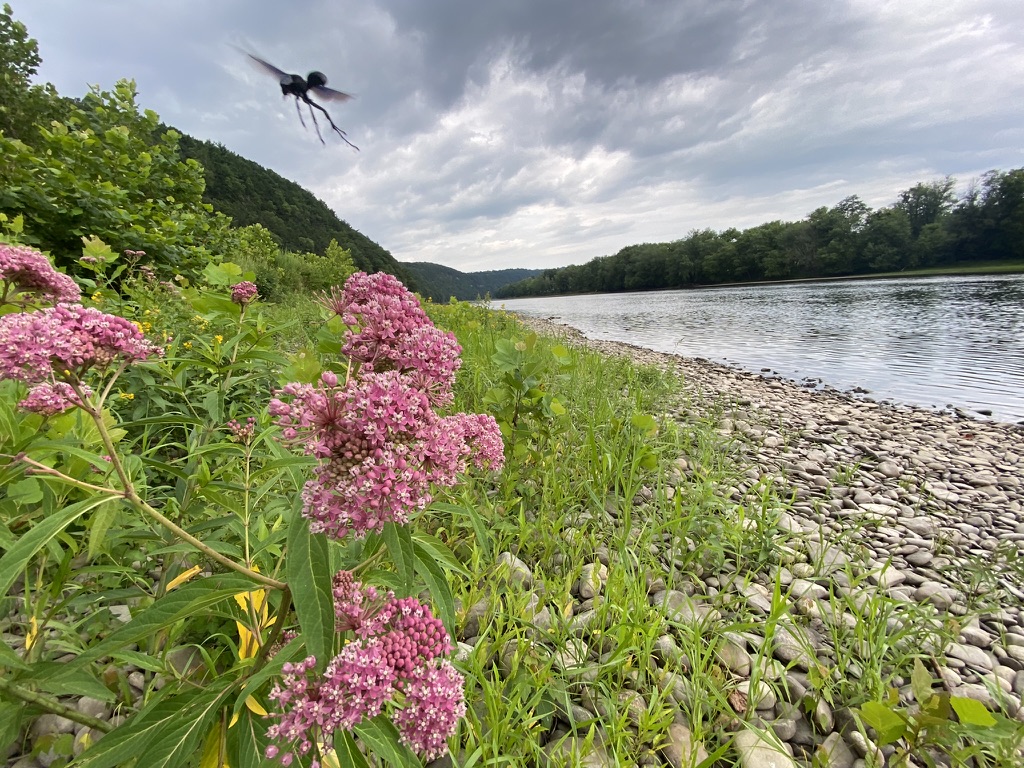
Botany by Boat: North Branch Susquehanna River

Seeing certain plants in the wild for the first time sticks with me. I learned plants from my jobs working in garden centers in high school and college (does anyone remember Frank’s Nursery and Crafts? This is, incidentally, the first place I ever got high – they had me, freshman college student, glueing PVC pipe together for a greenhouse irrigation system inside the greenhouse for hours, you know that purple primer and the glue, after my shift I had to sit in my car for a while breathing in clean air before I felt like I could drive – that’s what all the fuss is about – getting high? I was not impressed or interested in feeling like that again …anyway back to plants!)

Just as I remember very clearly that glue incident, I remember distinctly where I saw some of my first familiar plants in the wild. My nascent plant education was not through finding plants in the wild and learning what they are, but through working in retail garden centers, answering customers’ questions and unloading, organizing, staging, arranging, watering and maintaining plants in nursery yards. Then I learned my plants in college using our botanical garden campus as a classroom. My early plants were containerized and immature or in an artificial garden setting. Sure I knew some plants from my pine barrens childhood – oaks, pines, blueberries, black walnut, sassafras, sweet fern and bracken fern but the plants I learned as I started my education and career were mostly, in my mind, commodity sized and situated.

As I started exploring more and more, and botanizing became a hobby obsession, I began encountering those plants I used to load into the trunks of Subarus and the beds of pick-up trucks as mature specimens in the wild.

This was magical to me and so educational. Here I could see where they really want to grow, versus where I may or may not have told a customer where they would like to grow. I could see their neighbors, who they want to grow with, what types of plants thrive in similar conditions of soil type, soil moisture, sunlight and exposure.

I distinctly remember the excitement of finding my first, and only to date, wild Oakleaf Hydrangea in a Mississippi forest. My first Sweetspire growing along a tea-colored creek in my beloved Pine Barrens. My first wild Alumroot dripping off a soggy wall in a Pennsylvania preserve. These memories are indelible. (If I meet you and we have met before and it seems I cannot remember your name, please note what my limited memory storage space is filled with) Prior to these encounters, I had only known these plants as inventory.

This trip on the Susquehanna added another memory to the list.

Continue reading Botany by Boat: North Branch Susquehanna River
New To Me

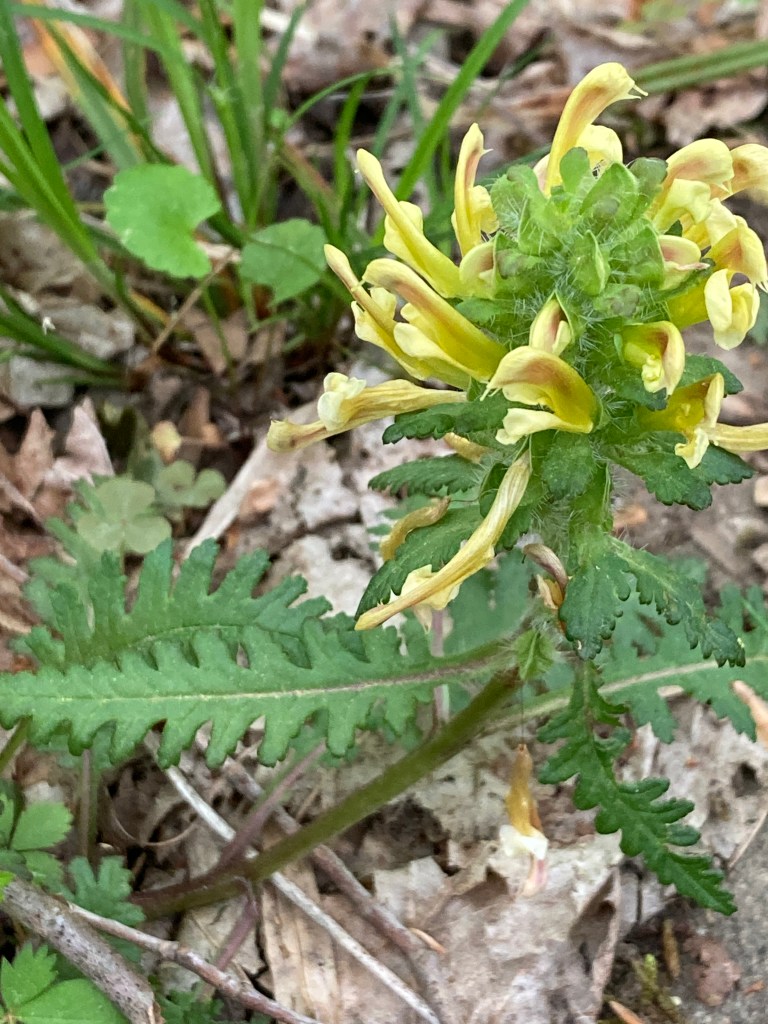
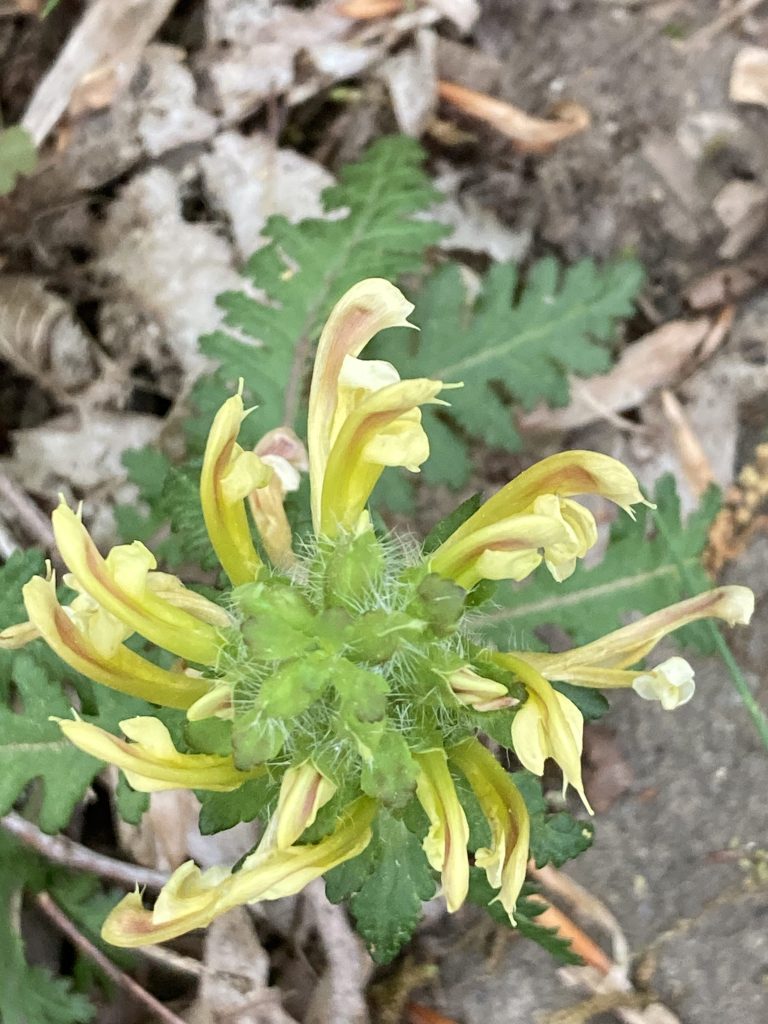
Wood Betony (Pedicularis canadensis)

I have a goal to hike 250 miles this year. I figured this averages out to about 5 miles per week and that felt like a realistic, yet challenging, goal for me.

As of today I am 127 miles in and have been hiking at least weekly since January.

Hikes serve many purposes in my life: meditation, relaxation, connection, reflection, exploration, and education.

Here I share some of my trail education. I am always looking at the plants along my hikes, naming them if I can, and trying to figure out who they are if I can’t. Some of us call this process botanizing.

These are new-to-me plants I encountered on some of my hikes this year. Nearly every time I go out on a trail I run into a plant I have never noticed, never learned, or have long forgotten. I don’t typically take a field guide with me on the trail. I take so long taking photos on these hikes already I am afraid adding the potential for dive into a field guide around every bend would keep me from getting very far at all. So my process is to take photos of the new-to-me plant and then figure out who it is when I get home.

The photos I take are of the habitat (where it is growing); the habit (its overall form or shape); the flowers if it is blooming (close ups from top, side, bottom and front , making sure to capture the pistils and/or stamens if present); the leaves (the entire leaf, a close up of the leaf margin, the underside and a close up of the leaf veins); and the stems (focusing on color and hairs, both leaf stems and flower stems); if it is a woody plant I will also take photos of the bark and the twigs (including leaf scars).

I then come home and consult a field guide depending on the type of plant. I know there are apps for this. But I like this process of documenting the details and then when I get home from a hike diving into these details and solving my personal mystery using a book, with pages and an index. I find when I do this, these plants stick with me and I remember them forever.

Of course, this is not a fool-proof system and sometimes I need to revisit the plant (aw shucks… another hike) to gather intel on some teeny tiny detail that separates one species from another.

Here are a few of the new-to-me plants I did figure out and will now know forever:

Wood Betony (Pedicularis canadensis)

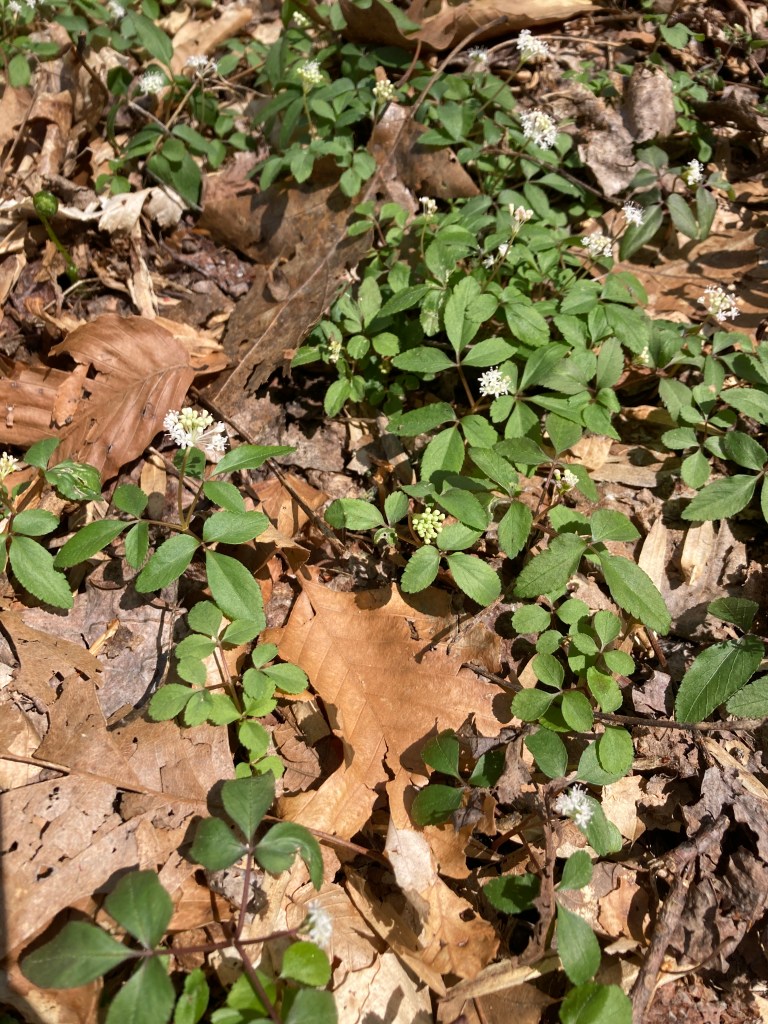
Dwarf Ginseng (Panax trifolius)

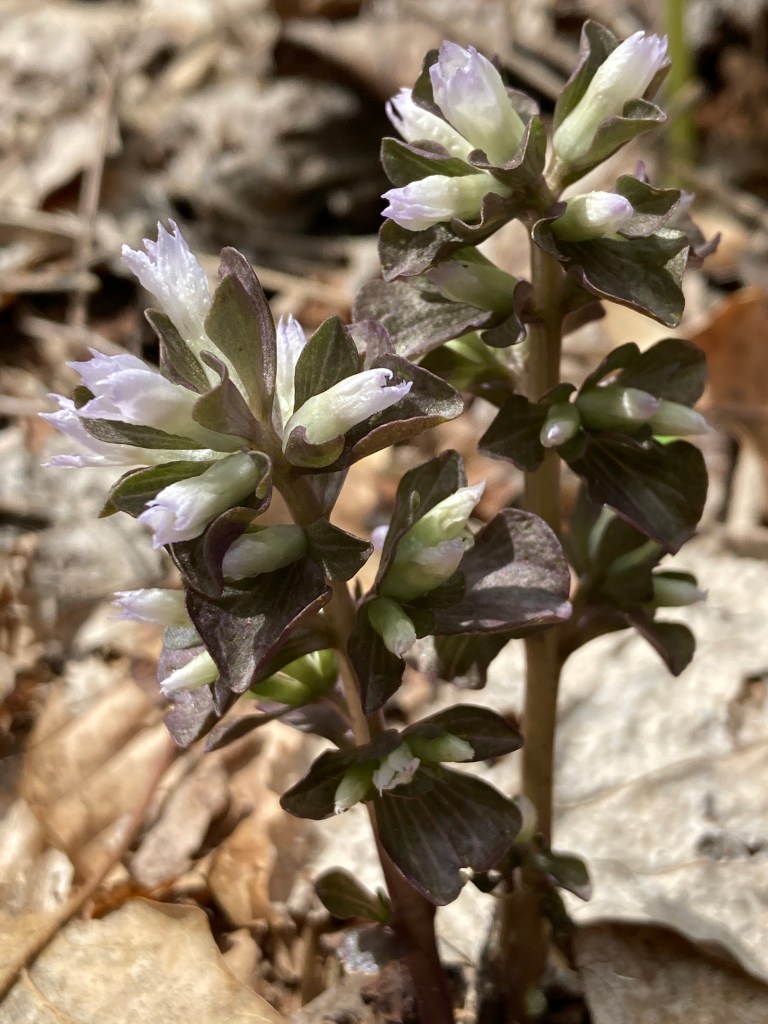
Pennywort (Obolaria virginica)

One-flowered Cancerroot (Orobanche uniflora)

A little parasitic gem. No leaves, just these 5 petaled flowers. Wondering about the name? It is also known as Broomrape. Check out this excellent New York times article about this weird little plant with the unfortunate names.

Deerberry (Vaccinium stamineum)

Some things still remain pretty consistent mysteries to me:

Mosses

Fungus

And

Ferns

But eventually I will develop a system for identifying these too and they will stick with me, in the meantime I am ok with the mystery.