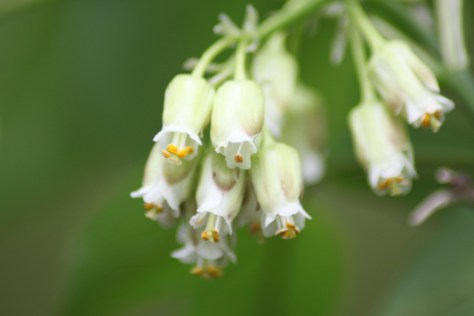
Bladdernut. I am convinced this plant has not made it into the landscape trade and into more backyards because of its name. Who wants to ask the garden center professional for Bladdernut? Who wants to answer when their friend asks “what is that interesting flowering shrub?”, “Oh that? It’s Bladdernut”. Other plants with less than pretty common names have made it into plant catalogs by sporting tags with their {{gasp}} scientific names or a new less offensive common name. Think of Tradescantia. Many catalogs market the Spiderwort as Tradescantia or have even created an entirely new common name with more marketing power: Spider Lily. Similar stories abound. Butterfly Weed (Asclepias tuberosa) has become the gardener-friendly sounding Butterfly Flower or Butterfly Milkweed. One of my favorite spring blooms, the Liverwort, is more commonly available as its scientific name Hepatica. (Wort, you may be interested to know, is the old English term for plant. Often plants were names for the problems they would solve – Liverwort = Liver problems, Spiderwort = curing spider bite.) I think it’s time for a name make-over for the Bladdernut. What can we call it to get it into more backyards?
Once again I find myself on my local rail-trail. I am trying to get my heart-rate up so this meander will count as some form of exercise, but I keep stopping to look very closely at tiny little wildflowers blooming everywhere. It is truly like I stepped into a jewelry box. Virginia Bluebells coat the hillside in blues and pinks. White saxifrage, rue anemone and Dutchman’s britches dot the trailsides like scattered pearls. Various shades of jade and emerald are starting to appear on gray branches. The creek along the trail, very high after all these rains, slithers through the color like a gold chain. I should just go to a boring track, who can focus on fitness with all this beauty around? Each time I squat down to investigate, that’s a rep…right? Today I am enamored by the violet. If I am going to take the jewelry box analogy just a little too far…these are the amethysts.
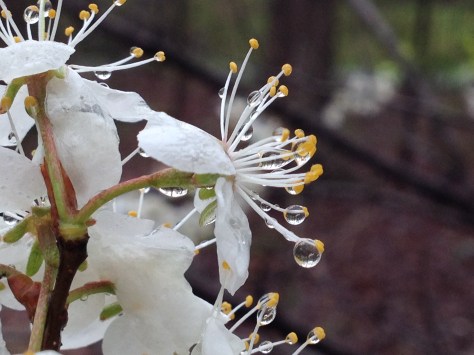
American Plum after last night’s heavy rains. The sweet fragrance is still evident on the wet blooms.
As I have mentioned before I don’t really have the space for plants offering only 1 season of interest. As with any rule, there are exceptions. The exceptions to my “must have more than 1 season of interest” are 1) if it is a spring ephemeral, it may stay and 2) if it is edible I will consider a place for it in my landscape. The American Plum fits into the second category. This native (Prunus americana) small understory tree flowers the same time as Bradford Pears. Unlike Bradford Pears, the blooms of American Plum smell sweet and wonderful. Like the Bradford Pear, this tree can be found along roadsides, medians and in fallow fields. Unlike the Bradford Pear, it is supposed to be there. As I walked around my yard a couple of days ago, the scent of the flowers drew me in and I stood for quite awhile with my nose tucked into the white flowers. Continue reading American Plum→
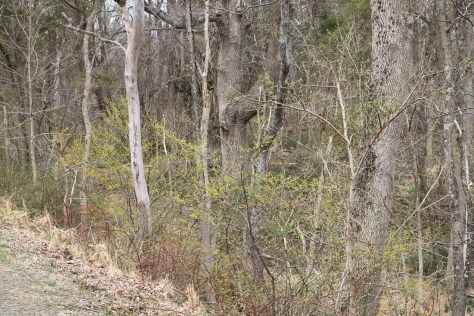
If I had 100 acres of my very own to garden in any way I wanted…I might plant a forsythia. I dabble in cut flower arrangements and there is something so hopeful and encouraging about a pretty vase with a tall forced branch or two of forsythia in full bloom in February on your toilet tank. (Yes, toilet tank. My first floral design teacher told me nothing says “class” like flowers in the bathroom and that has stuck with me through the years). But I would only plant forsythia if I had that much space. And I don’t. Forsythia has a characteristic that I do not tolerate in my gardens; 1 season of interest. There’s no room in my yard for a plant that is only interesting for a couple weeks.
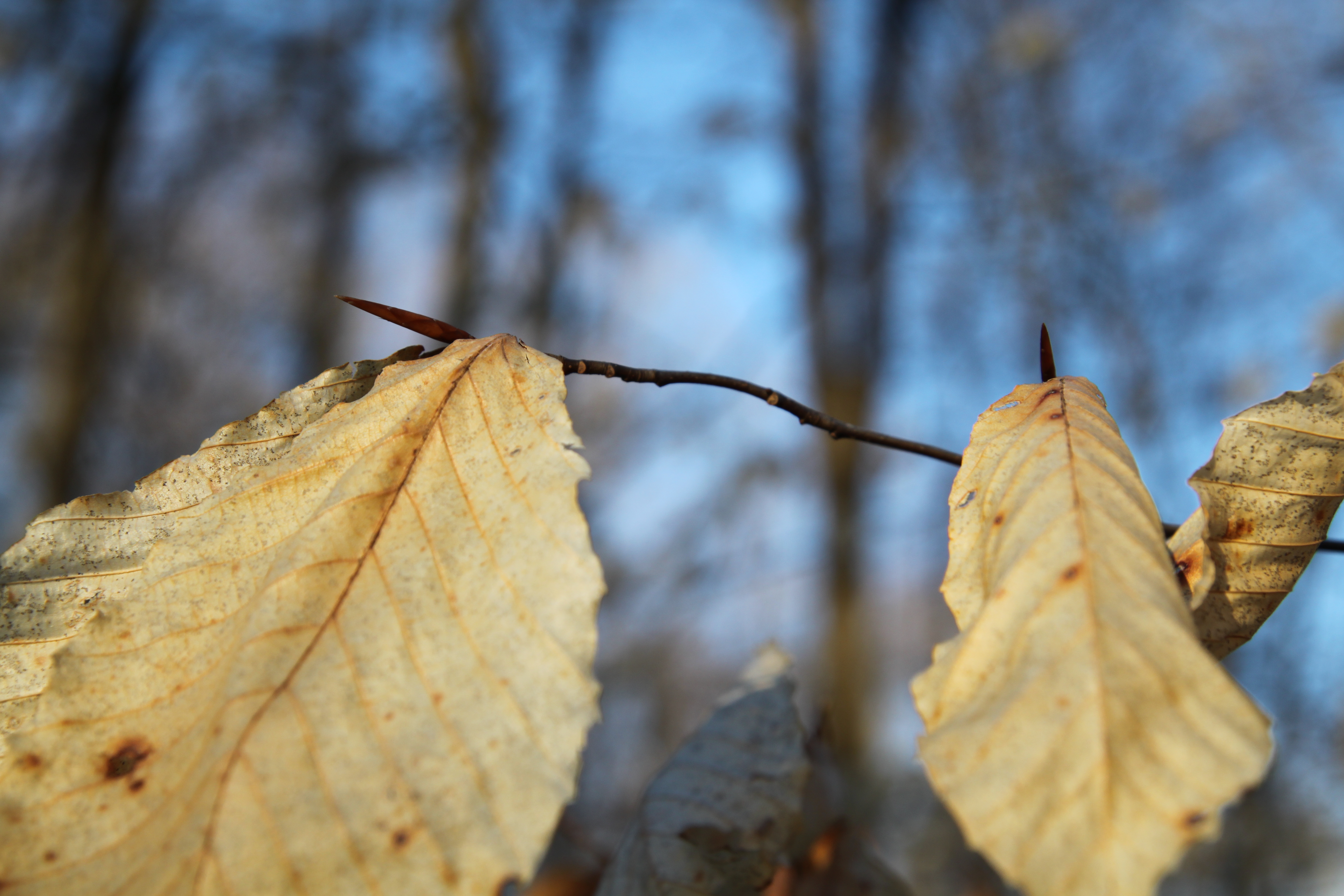
Buds of the young beech tree protected by leaves hanging on through the winter.
Once again I am searching for signs of Spring. It is a rainy day and I am hiking in a park close to home. Like a lot of you, I’m sure, I am a sucker for woodland wildflowers. I get so excited when I find them. I am constantly on high alert for tiny spots of yellow, purple and even white breaking up the monotony of the leafy forest floor. But on this dreary day, there are no bright spots. Not one! The last of the snow hasn’t cleared from the shady spots and ice is still on the reservoir. So I lift my gaze from the ground to take a closer look at what is right in front of me.
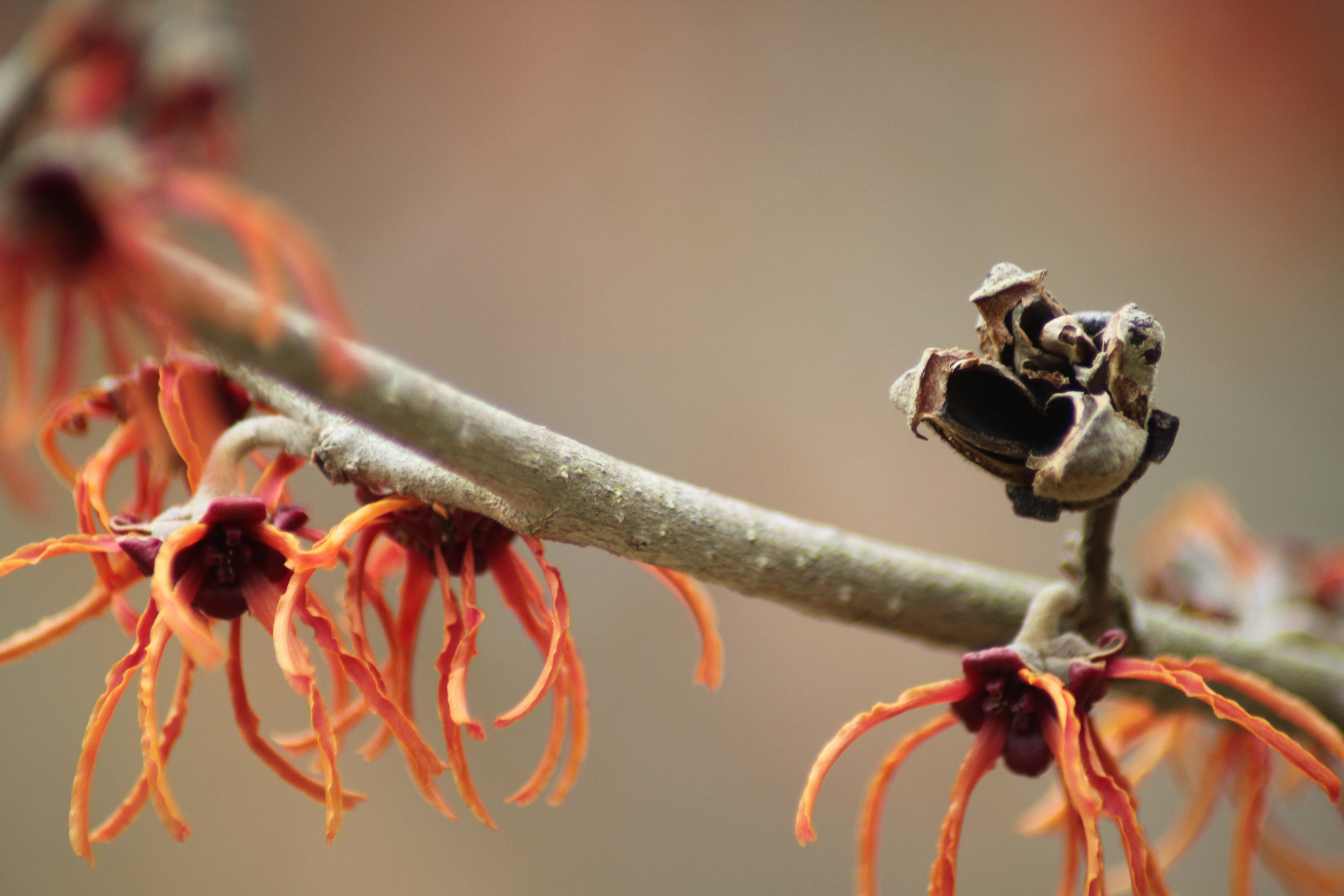
Hamamelis x intermedia ‘Rubin’ Seed Capsule and Flowers
Some of the most fascinating things you learn by accident. That is how I became aware of the forces of the Witch Hazel. I was taking a botanical illustration class at the Morris Arboretum of the University of Pennsylvania and had an assignment to collect some botanical materials to draw in the next class. Being fall, I collected crunchy leaves, seed pods and acorns. I placed everything in a small cardboard box on top of the TV where they would stay, and I wouldn’t lose them, until next class. A couple evenings later I am settling in for the night, curled up in a chair watching what my dad calls “the idiot box”. During a lull in the program I hear a noise. A faint tap. What in the world?
If you aren’t looking where you are going in the early spring muck, you may miss these wonders. As I was hiking this weekend, I admit, I stepped on one of these flowers camouflaged among the fallen leaves and reflective puddles of melting snow. To me, seeing these means spring is on its way. This year, they are blooming a little bit later than their typical February debut, but even these curiosities couldn’t get themselves out from underneath the thick blanket mother nature provided this winter. A little bit of snow is no challenge for these native perennials, in fact, like fancy ski resort walkways (so you don’t slip getting to the lodge for that refreshing beverage), they have their own internal snow melting system. Skunk Cabbage (Symplocarpus foetidus) creates its own heat! Know who else does this, a process also known as thermogenesis? People, mammals. Yes, here we have a plant that creates its own heat, like we do. Well, not exactly like we do. But, this blog isn’t about plants that make their own warmth, it’s about plants that move and how they move. So why the skunk cabbage? Two reasons.




 HORT travels