Category Archives: Native Plants

Goldenrod

Bloom of Seaside Goldenrod (Solidago sempervirens)

“Oh sweetie, not you, what are you doing here?”

said the security guard behind the desk in the campus security office. It is the night before graduation and I am being escorted with my then boyfriend, now husband ex-husband, by local police into the security office for on-campus drinking.

The fact that we are both of-age and the campus wasn’t a dry campus when we both started school (I mean shouldn’t there be a grandfather clause?) and that we didn’t even have anything to drink (honestly!) – we were leaving campus – cooler in tow – for an off-campus party – doesn’t mean anything to these uniformed fellas. I am trying to keep calm and tell the officer that in fact I WILL be graduating tomorrow regardless of what he thinks. He’s telling me I am not going to walk. This is the first time I have been in trouble at college (unless you count the whole outdoor holiday lights inside the dorm debacle) in the 4 years I have been there, and it is the next to last day of school.

The reason the security guard was so surprised to see me was because the only time I’ve been in that small structure was to buy my parking pass. My relationship was fairly new at the time, but I was fairly sure this was not his first run-in with security.  A few hours and a confiscated cooler later, (they decided we weren’t doing anything wrong after-all) we’re allowed to go and I graduated the next day.  If it hadn’t been for the company I was keeping, would I have been in that situation? Probably not, I probably would’ve been reading a book somewhere quiet. But I also wouldn’t have had nearly as much fun, met as many terrific people or had stories to tell.
Continue reading Goldenrod

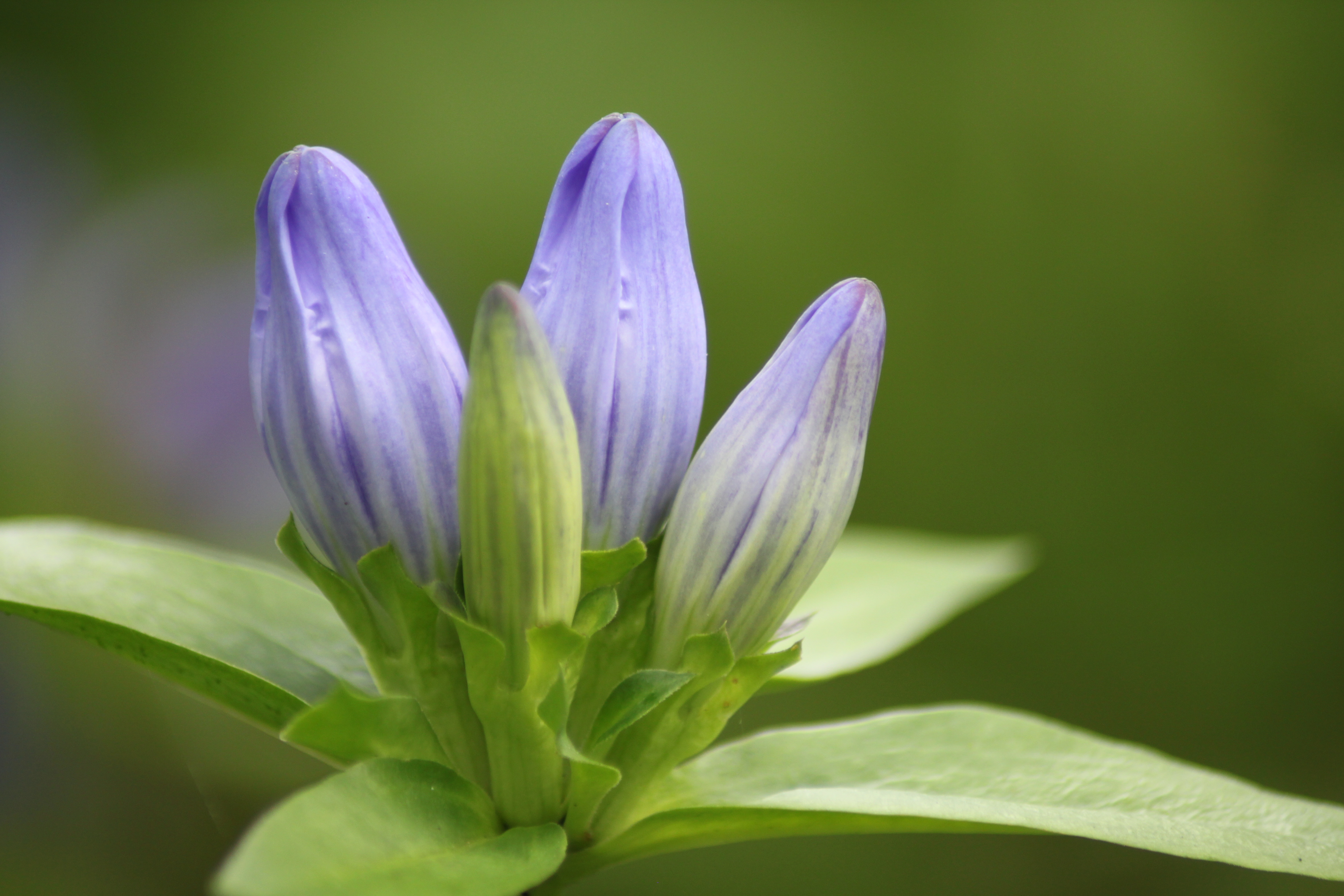
Closed Gentian

Flower colors can range from pale purple to deep sapphire depending on age, light, time of day.

It’s hard enough for me to get my kayak down a whitewater river upright without being distracted by flowers along the way. I am happy to say on my latest voyage, it was not the blooms that tripped me up but my own inexperience. (I’m still learning the basics when it comes to whitewater kayaking and as the two River Zen Masters in my life constantly remind me “Kayaking is what you do between swims”… it is my own mantra now.)

Paddling with other horticulturally-minded people means extra time on the water, paddling back upstream to get a closer look at the flowers along the bank. This trip was no exception. Today’s distraction – Closed Gentians. I don’t know if it is the seeming simplicity of these flowers, the intense color or their apparent rarity that makes me stop (or paddle back upstream) to look at them, closely, and for a while, every time I see them. This day these were blooming along with White Turtleheads (Chelone glabra), and Red Cardinal Flower (Lobelia cardinals).

Continue reading Closed Gentian

Yellow Late-Summer Blooms

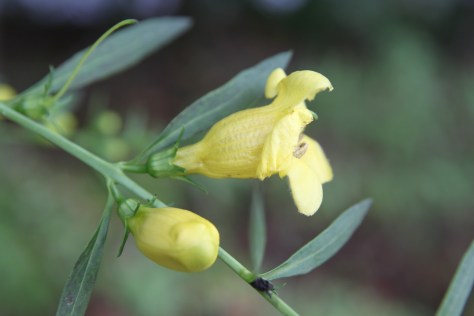
Yellow False Foxglove Flowers

Moving to a new state, even just across one big river, can lead to interesting new discoveries.  Two horticultural discoveries have intrigued me since I have moved here. These are two late summer blooming flowers I was unfamiliar with until I started exploring the natural areas around the place I now call home.

Continue reading Yellow Late-Summer Blooms

Sumac


Smooth Sumac Fruit (c) Kathleen V Salisbury
The fruit cluster, or Bob, of Smooth Sumac (Rhus glabra) along a Rail Trail in Southeastern PA


My dad looks at me dubiously over the dining room table all decked out for Thanksgiving. I recognize the look, because I have inherited it. If I feel someone is feeding me a line of crap you can read it all over my face, and that is what I am seeing here, across the table. Why the look? I have just told my dad the contents of the flower arrangement nestled among the good china, newly shined silver and gold rimmed wine glasses. I have always loved to go outside and gather what’s interesting from the yard to create seasonally representative flower arrangements. I enjoy doing this anytime but always create something for the big holidays. To me, it is fun to explore the yard in a different way, looking at plants and their parts as components of a floral design instead of a landscape design or plant community.

My dad has every right to be a little doubtful about this creation. My penchant for bringing nature onto the holiday table has certainly resulted in our fair share of spiders, caterpillars, moths and other insects venturing out from their botanical hiding place and onto the crystal butter dish.  This is not lost on him. Family and friends at these dinners have always taken these visitors with good humor, laughing as, red-faced, I capture the critter and release it back into the wild. This late afternoon, the guests have not yet arrived, the table is still being set and I just placed an offending flower arrangement in the center of the table.

Continue reading Sumac

Blueberries

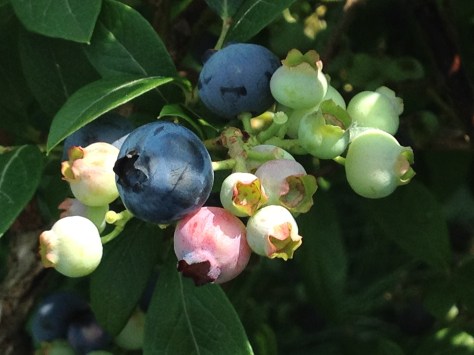
Many Stages of Blueberry Fruit

“Girls, can you run outside and pick some blueberries for the pancakes?”

was a question common in our house each June and July Sunday. We would grab a cup and head out to the woods, not the garden, the woods, to pick as many blueberries as the cups would hold, presenting them proudly to mom and dad who were in the kitchen whipping up pancake batter while we stalked the wild berries. If I remember correctly, it was “2 for the cup one for me”, or maybe the other way around. I think about this during a recent visit to western Maine as I squat down to examine small blueberry bushes, with diminutive fruit on them. These are similar to those we harvested beneath the oaks and pines in NJ but are a far cry from the behemoth berries I picked a week ago from a friends farm in Northern NJ.

Continue reading Blueberries

About that tree in Brooklyn (or… Adventures in Finding Free Things to Do in the City…)

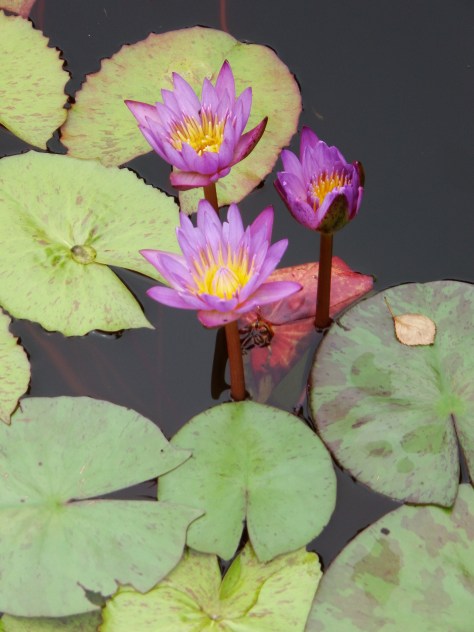
Lily Pond at the Narrows Botanical Garden

Perhaps you read the Betty Smith novel A Tree Grows in Brooklyn.  {{Spoiler alert}} The tree in the story was an Ailanthus altissima or Tree of Heaven. This tree is known for its ability to thrive in even the harshest of conditions, hence its use as a metaphor for the strength and tenacity of the main character in the book.

“There’s a tree that grows in Brooklyn. Some people call it the Tree of Heaven. No matter where its seed falls, it makes a tree which struggles to reach the sky. It grows in boarded-up lots and out of neglected rubbish heaps.  It grows up out of cellar gratings. It is the only tree  that grows out of cement. It grows lushly…survives without sun, water, and seemingly without earth. It should be considered beautiful except that there are too many of it.” Betty Smith, A Tree Grows in Brooklyn

The “ghetto palm” (as my inner-city high school interns once described it to me) has become a bit too successful dominating roadsides and vacant lots in all but 6 of the states. Introduced from China as an ornamental plant Ailanthus was planted widely throughout the Northeast in the first half of the century. It fell out of favor with the horticultural crowd but despite its lack of popularity continued to insert itself into devoid and neglected areas of our landscape.  In his book Wild Urban Plants of the Northeast Peter Del Tredici asks us to take a different look at these weed plants colonizing waste spaces.  He suggests that these “weedy” and “spontaneous” plants benefit the cities by creating forests and the ecological benefits associated with forests, at no cost to the residents. Hmmm. Del Tredici says these are as important part of the urban landscape as the native plants restricted to protected natural areas and the highly maintained cultivated gardens on display throughout the city.

I am still digesting this point of view as it flies in the face of everything familiar to me. While I appreciate the sentiment, science and statistics, it is still hard for me to promote the embrace of invasive, weedy plant species to the detriment of native plants and the wildlife they support.  As I continue to consider and explore this topic, I visit those highly manicured cultivated garden spaces that are also an important part of the fabric of a city. This trip takes me to Brooklyn.

Continue reading About that tree in Brooklyn (or… Adventures in Finding Free Things to Do in the City…)

The Small Things


Ahh the Ladybug...Everyone's Favorite carnivorous Beetle
Ahh the Ladybug…Everyone’s Favorite Carnivorous Beetle

Over the past couple of weeks I have been noticing the insect life on the plants near me. So many times I interact with people interested in gardening for the beauty of the flowers and the value of vegetables for their dinner table. Little do they think about the value of the fruits of our garden to the smallest residents, the insects. Rarely, when they consider their newest plant for their garden do they consider the beauty of the bloom or the fragrance of the flower is meant to attract insects, and just happens to be appealing to us as well.

People get frustrated when caterpillars chew holes in leaves, when bees surround the flowers planted near walkways. But that is the purpose of the flowers. They are just doing their job! The same can be said for the insects. I run into students when I am teaching expressing grave concern regarding the bugs in their yard, asking what they can do to get rid of them. “Pave your yard“, is my internal answer. Not much thrives on asphalt. Being an educator, my actual answer is an explanation of the insect/plant connection and ultimately the insect/human connection. You know, how without insects, our lives would be much much harder. Really, you can’t have beautiful flowers without the bugs that go along with them.

Continue reading The Small Things

Oakleaf Hydrangea

Oakleaf Hydrangea Flowers
Oakleaf Hydrangea (Hydrangea quercifolia) Flowers

One of my favorite plants is flowering in my yard right now. I love this plant. It is bold, in your face and it passes the multiple seasons of interest test.  Every time I see this bloom I am taken back to a forest in Mississippi. My sister and I were on our way back from a road trip to Louisiana, camping the whole time. We stopped in a state park along the Natchez Trace Parkway to take in the sights and stretch our legs following a short hiking trail that seemed made for just such a purpose. We stuck our heads through holes in large trees taking ‘selfies’ before it was the thing to do, watched new-to-us very large spiders make their way along handrails we dared not touch. Suddenly I stop and utter a “do you see that?!” from under the hand clasped over my mouth. I am that person. I get so excited when I see plants I have only known in landscapes thriving in the wild, where they have not been planted where they just ARE because they belong there. Sort of like the experience I had in Greece with the Bear’s Breeches.

Continue reading Oakleaf Hydrangea

Waterfalls and Wildflowers

IMG_8057

When I was young nearly EVERY vacation we went on had to involve a Scenic Railroad in order to happen. In other words, no train- we weren’t going there. I think the only reason we went to Disney (AKA “Ratland” by my train-loving dad) was because of the Big Thunder Mountain Railroad. (This incident left me in tears and fearful of roller coasters until my senior year in high school when we HAD to ride roller coasters in order to complete physics experiments at Great Adventure’s Physics Day. My so-called friends convinced me to not only get on a roller coaster, but to get on the one that had a loop and went backwards. Now I’ll ride nearly any roller-coaster. I guess they were good friends after all.) As my dad feels about trains, I feel about waterfalls. Wherever my adventures take me I seek out the waterfalls nearby. Over the past couple of weekends I was lucky enough to be near quite a few falls, and the timing was perfect to see a great variety of wildflowers as well.

Continue reading Waterfalls and Wildflowers

Orchids

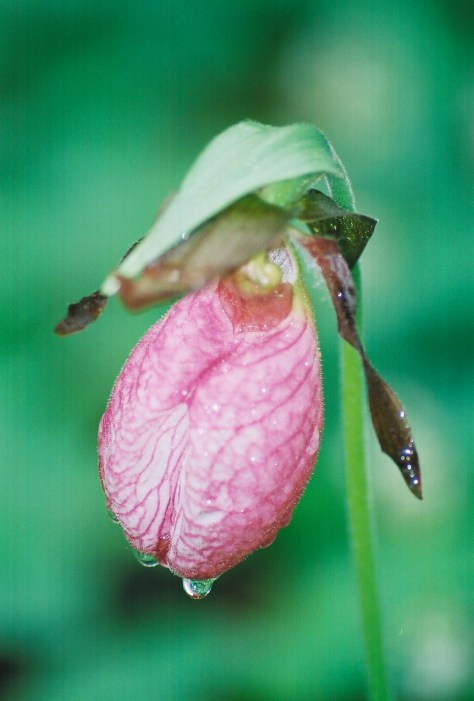
Lady Slipper in the morning  mist.
Lady Slipper in the morning mist.

‘Tis the season. I am getting beautiful pictures sent to my email and phone. The orchids are blooming! Friends share their finds with me regularly and each one excites me. These are not the run-of-the-mill tropical orchids you can now find in row after row at the big box stores. Though they are lovely in their own test-tube-propagated way. These are the wild, native, I-can’t-believe-I-just-found-an-orchid, orchids that make even the most grueling, mosquito ridden, tick infested, poison ivy covered hike worth the effort. May through October, I hike with one eye on the trail and one eye in the woods looking for bright spots of color that would indicate an orchid.

Continue reading Orchids