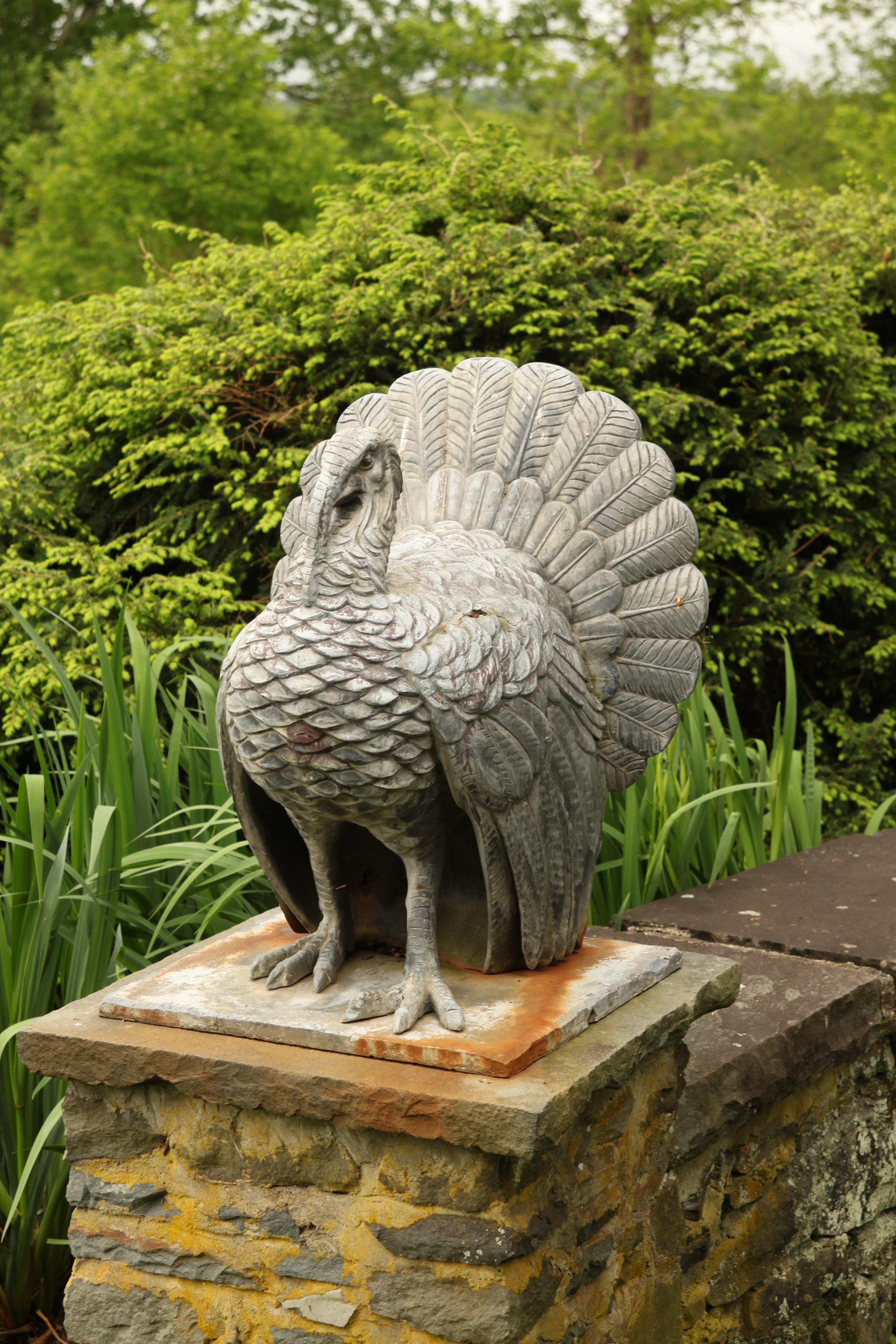
“American Bull” by Lorraine Vail at the Morris Arboretum, Philadelphia PAWhile I tend to find the fall colors of the native trees and shrubs here in the Northeast and Mid-Atlantic region something I cannot live without and something that makes me endlessly happy and at peace, others see the changing colors as the sure sign that winter is coming. They can’t enjoy the autumn display because all of those falling leaves depressingly morph into falling snowflakes as they watch them twirl down from the canopy.
As fall proceeds into its second month some lament the end of the growing season, putting away gloves and cleaning tools. Seed catalogs and garden magazines are piled up next to the couch for winter reading. People start to prepare for winter hibernation.
When it is time to sculpt pumpkins, people tend to think less about gardens and gardening as the changing of seasons leads us to think less about watering and weeds and more about turkey stuffing and present wrapping.
Turkey at Grey Towers Milford, PABut for those of us who enjoy the seasons, who want to explore wherever and whenever, I encourage fall and winter visits to gardens. Perhaps you have a friend or loved one who isn’t so much into gardening but likes to get outside. Drag them to a public garden or museum with outdoor sculptures. You as a gardener, or plant admirer, or nature admirer will find sculptures that will fill the gardening void in the fall and winter months. Some of my favorites from my horticulture travels are here.
Around here it is summer and the Scarlet Pimpernels (Anagallis arvensis) are blooming. To many the Scarlet Pimpernel is a novel set in the time of the French Revolution. To me the Scarlet Pimpernel is a sweet little orange flower that occurs in lawns and some have the nerve to call a weed.
The petite scarlet pimpernel is an European native that made its way here as an ornamental. Dainty orange flowers with red centers dot the square-stemmed plant in summer. Found in disturbed sites and waste areas, this plant thrives in poor soils. First named by English Botanist Richard Salisbury (No relation that I have found…yet – but I mean there MUST be right?) this annual is also known as Poor Man’s Weatherglass because of its tendency to close its flowers at the “approach of foul weather” (Manual of Cultivated Plants, L.H.Bailey 1949). The Reader’s Digest Field Guide to Wildflowers also notes that this botanical barometer closes at dusk, fails to open in gloomy weather and responds to rising humidity by closing its flowers.
Summer is also the time of book lists for beach reading. While I don’t generally go to the beach and read, I will have to add The Scarlet Pimpernel to my “to be read pile” (why is it that that pile never shrinks?) simply because it is named after a plant, not because it has anything to do with plants. There are some books out there I have come across and found even more enjoyable than I expected because of their unanticipated horticultural content.
As you may remember from previous posts, I am a Stephen King fan. When I was much younger my face was always stuck squarely in a Stephen King novel. At some point, as I grew older and picked my head up long enough to realize there are other authors and other genres out there, and as I became more and more interested in learning about the natural world around me, I decided to vary my reading selections. I decided I would read one non-fiction book for each fiction book I read. Naturally, I began my non-fiction reading with Stephen King’s On Writing. This memoir/guide to writing drew me into the non-fiction world and I am hooked. I used to think reading non-fiction was the equivalent of reading a textbook for fun, and really…textbooks for fun?
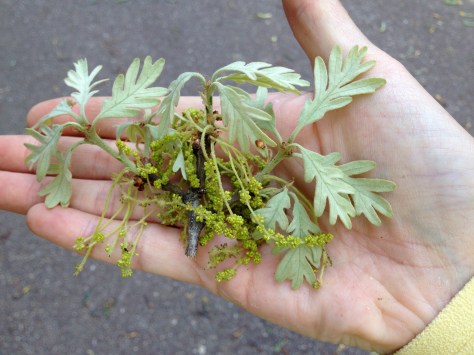
Sawtooth Oak (Quercus acutissima) flowers in Spring. Scott Arboretum, Swarthmore College PA
Everywhere I go people are sneezing. Spring seemed to happen all at once and the pollen from everything is coating cars, pavement and, apparently, nostrils in a dusky green film. Funny how people lament the late start to spring wondering where all the flowers are and then almost as soon as they show their cheerful colors people are wishing the blooms banished from the face of the earth.
It is true in the earliest weeks of spring there can be a lull in blooms. It is the time when the crystal magic of winter has passed but the jewel tones of spring haven’t yet exploded onto the scene. People are desperate for something that shows life will go on. This is when it is important to get out and look for the details. Once you start looking closer you start to notice the beauty in the subtle details of leaves emerging and of flowers that don’t need any extra attention.
Of course by now that lull has passed. Virginia bluebells, violets, trilliums and marsh marigolds are all but screaming their presence in their showy way. Plants with catkins remain quiet and subtle, letting the showoffs attract the pollinators – who needs them?! And until the pollen starts blowing in the wind no one notices them.
Catkins are wind-pollinated flowers. Catkins have emerged on the oak trees around here right now and many many people experience nostril distress with all this pollen floating in the air. Just like Ragweed, these flowers aren’t showy. They don’t need to be. They can reproduce every time the wind blows (I think I know some people like that…) Showy flowers are showy because they need to attract pollinators. Catkins are strictly functional, unless you are desperately looking for signs of spring and then they become quite lovely in their unique caterpillary way.
White Oak (Quercus alba) catkins and newly emerging leaves.
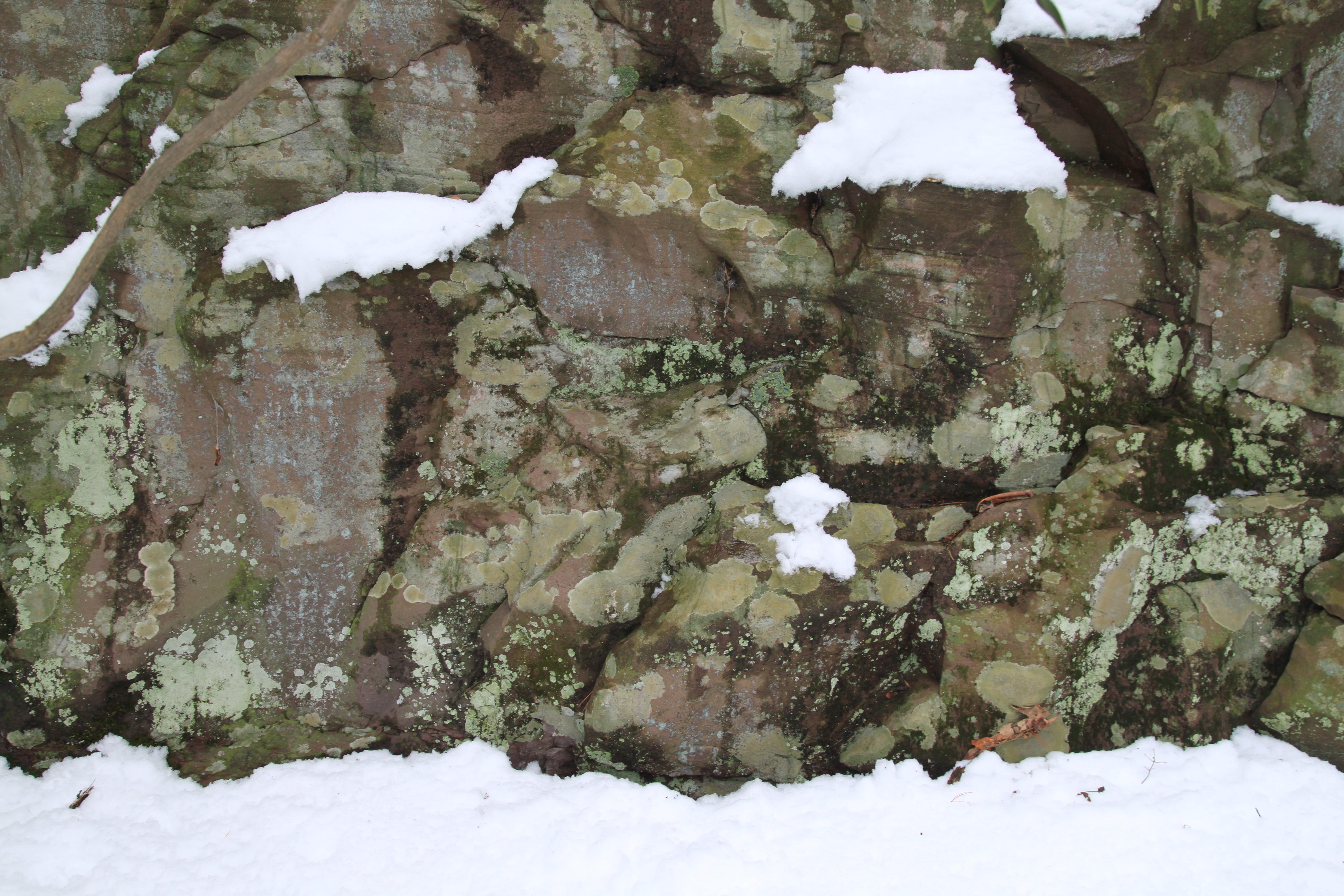
Snow and Lichens cover a boulder in Tuscarora State Park, PA
Seems as though spring is taking a bit longer to sprung. As I write this temperatures are dipping into the twenties. Though the tried and true late winter/early spring bloomers are slowly and cautiously making an appearance there is still barely a sign of green bud or yellow flower around.
This is when I get antsy. Snow is gone, well, almost, snowboards have been packed away and the gardening tools have emerged. But the ground is still frozen and the soggy soil means I can’t even plant my peas yet. What is a plant person to do, sit and twiddle my thumbs until it Spring actually arrives?
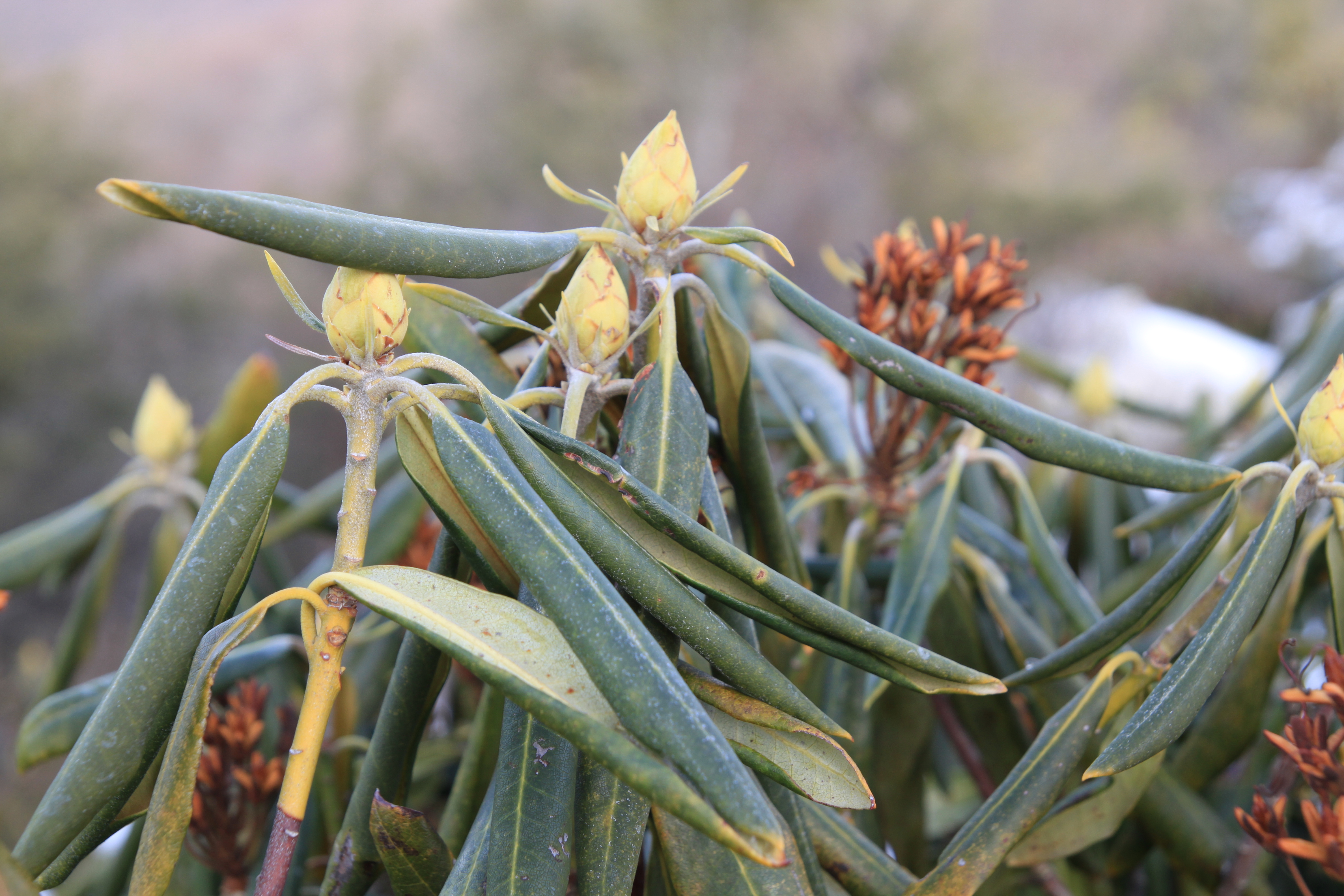
Tightly curled in protection, the leaves of Rhodendron exhibit the ‘droop and curl’ of thermonasty. This allows the shrub to survive winter winds and light. Hawk Mountain Sanctuary, PA
Whether you watch TV, listen to radio or just venture into any retail establishment you are well aware of the many elixirs, potions and formulas available to cure all sorts of ills both real and perceived. The same is true in the plant world. Any garden center you visit will have shelf upon shelf of chemicals, organics, salves, sprays, drenches, repellents, amendments and the like.
One that I have never understood is the use of Wilt-Pruf and other anti-dessicants on plants in the landscape. Sure, I sold it to folks as a young garden center employee without any knowledge of the way plants work, but were I in the same position today I would tell the friendly garden center shopper to save their money. Mother Nature’s got this…
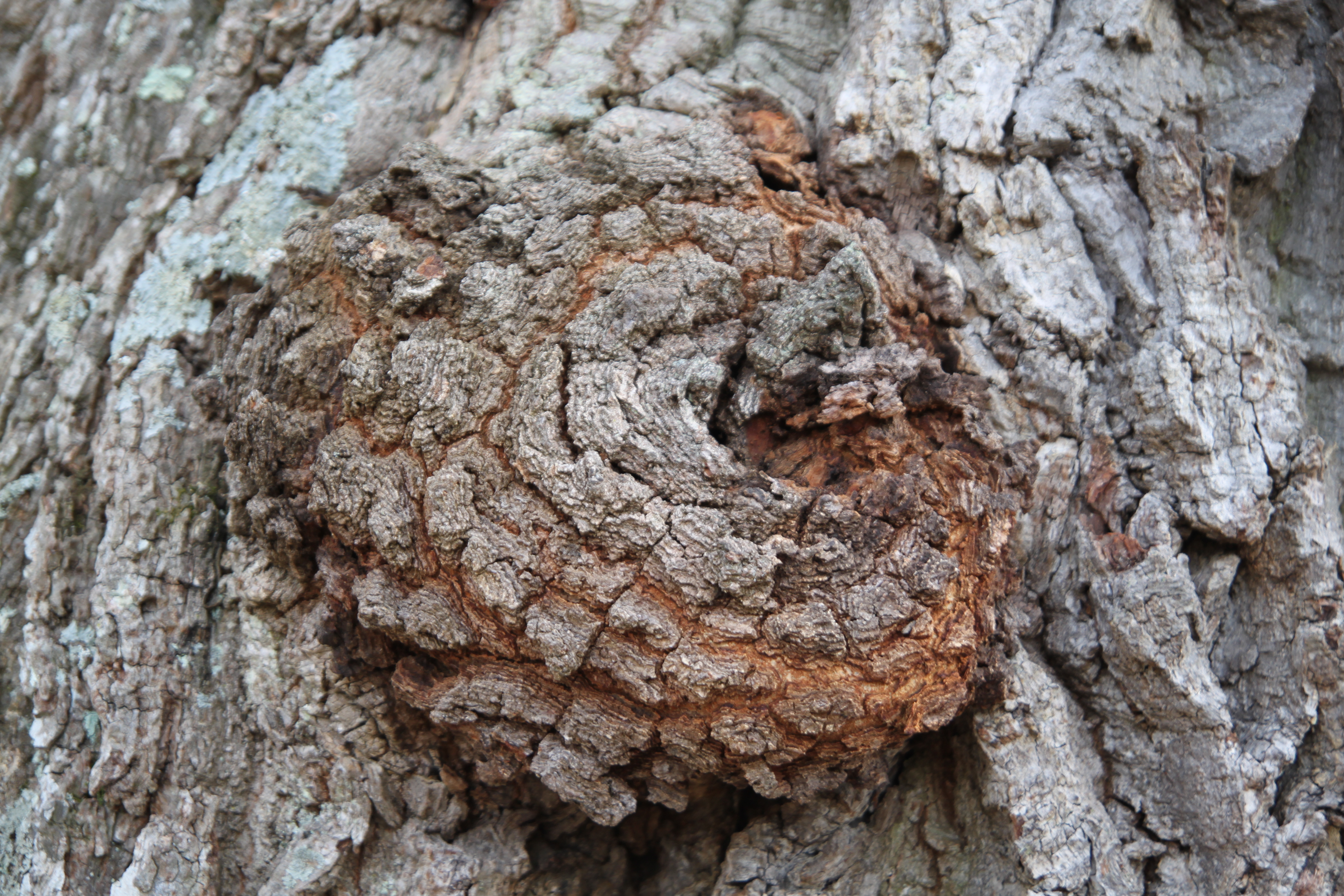
Winter woods expose many details otherwise obscured by foliage. One of nature’s wonders made more visible are burls. With just a slightly more involved glance into the woods you start to see these tree bumps frequently. You may know burls are treasured by woodworkers for the interesting patterns revealed when shaped by lathe then sanded and shined to a lustrous finish. There is a monstrous burl high up in a tree on my way to work. Each day I observe it with admiration and wonder. As we hike through the woods, friends and family ask: “What caused that?”, “Will the tree survive if you cut it off?”
“Before you leave the house, look in the mirror and take one thing off.” ~ Coco Chanel
Accessories. I like the whole idea of them. Bracelets, earrings, hats, snazzy shoes, purses. I have a sister who has a scarf for every occasion, and another sister with equally significant sunglass options from which to choose for any given moment. But my fascination with accessories stops at admiration. I do collect tiny stud earrings (usually horticultural in nature) made in whatever place I travel, but I rarely change from the tiny leaves that adorn my earlobes daily. Though I lean to the austere, I admire those who manage to put together combinations of clothes and accessories that tell the world who they are. I admire people who wear their personalities, regardless of what the world thinks. Folks who own whatever runway the world throws at them that day.
On a recent visit to the southeast, the Live Oaks (Quercus virginiana) caught my attention. Though they were immense and old, stately and sinuous, it was not those features that captured my attention. It was their accessories.
Monkey Puzzle Tree (Araucaria araucana) is NOT a Pine Tree
According to my dad all cats are girls and all dogs are boys. That’s just the way it is. Every cat is a ‘she’ and every dog is a ‘he’. Of course for many years we had a male cat and a female dog, but that didn’t matter. My dad doesn’t seem to be alone in this sentiment. My father-in-law ex-father-in-law also always refers to dogs in the masculine and cats in the feminine.
Something similar happens at this time of the year. As people start searching for their Christmas trees, often they refer to every Christmas-tree shaped object in the lot and in the woods as a pine tree. Just like all cats are not girls and all dogs are not boys, all evergreens are not pine trees.
Of course a garden is more than flowers. There’s weeds and bugs too! The nice thing about gardening in this region – the mid-atlantic – is that we can create a garden that has flowers blooming nearly 12 months of the year. Sure those late fall and winter flowers may not be the showstopper the Hibiscus pictured above is, but they are flowers nonetheless. Summer is the time when flowers abound, annuals like impatiens, begonias and marigolds brighten up gardens throughout the warmer months, only succumbing when the first frost hits, turning them into mushy piles of petals. For those of us more inclined towards the perennial persuasion of plants, having blooms throughout the growing season means developing a diversity in the garden that ensures multiple seasons of blooms. It is not as simple as planting rows of impatiens we know will keep blooming through the summer. We have to plan a sequence of flowering to ensure something’s in bloom whenever we gaze into the garden. I love this challenge. When I worked in an urban educational garden, I challenged myself to create a garden with 4 seasons of blooms. Not just four seasons of interest, which we had, but I wanted visitors to see flowers in the city whenever they visited. Through careful selection and combination of trees, shrubs, perennials and bulbs flowers could be found 12 months of the year, much to my delight and to the delight of the visitors.
But there’s so much more to a garden than flowers. I always tell my students while flowers may be present for just a short time, foliage is there a lot longer and you should always consider the foliage when you are planning to add a plant to the garden. When considering interest in the garden and bloom times, don’t forget about the foliage!
This was cemented in my brain after a trip to Costa Rica. I had never been there before and it was pre-google (& pre-digital camera – 23 rolls of film later!). I was expecting orchids dripping off the trees, practically slapping me in the face everywhere I went. I expected carpets of tropical flowers lining every road and trail. What I didn’t expect was green. Lots of green, everywhere green and not many flowers to speak of (well, at least compared to what my vivid imagination conjured). During a canopy tour, I peered over the swinging bridge railing into the top of the rain forest and noticed how different all the green was. There were countless shades of green and the textures ranged from the coarse Monstera speciosa or Swiss Cheese Plant to the lacy Tree Fern. It was fantastically beautiful. From then on I had an appreciation for how beautiful and interesting foliage can be.
Costa Rica from above
My recent visit to the Scott Arboretum of Swarthmore College really solidified for me what one can do in a garden by simply taking a considered look at foliage.
Just a small portion of the Terry Shane Teaching Garden at Scott Arboretum
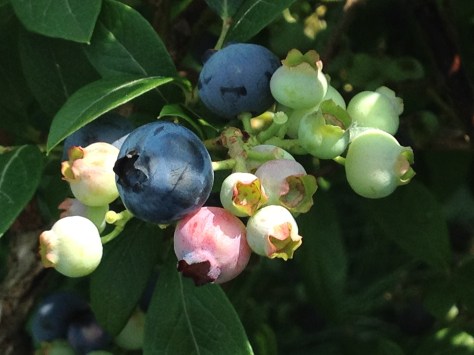
“Girls, can you run outside and pick some blueberries for the pancakes?”
was a question common in our house each June and July Sunday. We would grab a cup and head out to the woods, not the garden, the woods, to pick as many blueberries as the cups would hold, presenting them proudly to mom and dad who were in the kitchen whipping up pancake batter while we stalked the wild berries. If I remember correctly, it was “2 for the cup one for me”, or maybe the other way around. I think about this during a recent visit to western Maine as I squat down to examine small blueberry bushes, with diminutive fruit on them. These are similar to those we harvested beneath the oaks and pines in NJ but are a far cry from the behemoth berries I picked a week ago from a friends farm in Northern NJ.






 HORT travels