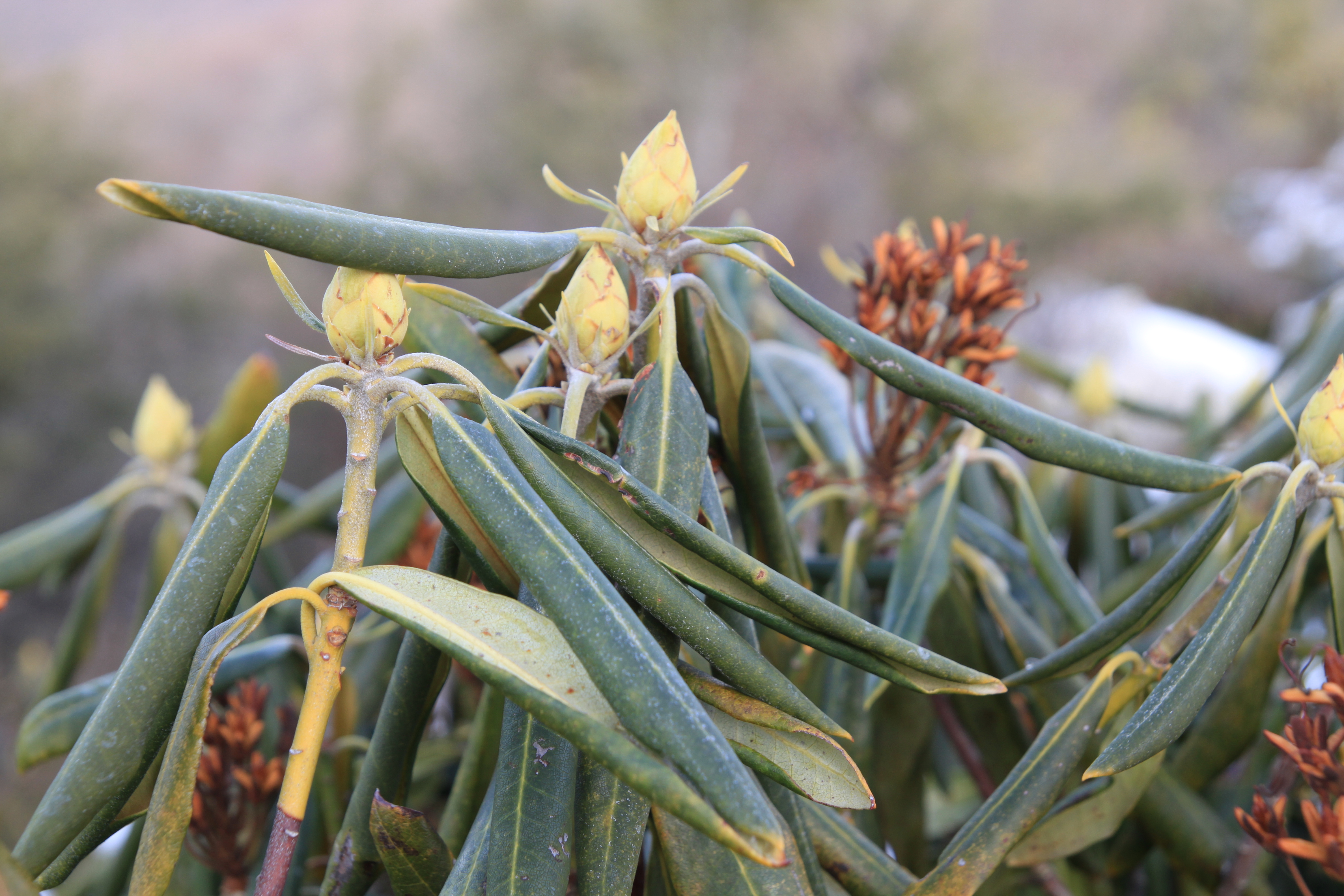
Tightly curled in protection, the leaves of Rhodendron exhibit the ‘droop and curl’ of thermonasty. This allows the shrub to survive winter winds and light. Hawk Mountain Sanctuary, PA
Whether you watch TV, listen to radio or just venture into any retail establishment you are well aware of the many elixirs, potions and formulas available to cure all sorts of ills both real and perceived. The same is true in the plant world. Any garden center you visit will have shelf upon shelf of chemicals, organics, salves, sprays, drenches, repellents, amendments and the like.
One that I have never understood is the use of Wilt-Pruf and other anti-dessicants on plants in the landscape. Sure, I sold it to folks as a young garden center employee without any knowledge of the way plants work, but were I in the same position today I would tell the friendly garden center shopper to save their money. Mother Nature’s got this…
All things vintage strike my fancy and this garden had me at its sign:
The Retro Sign of Sunken Gardens – St. Petersburg, Florida
I am thinking of this small gem today as I keep the wood stove burning and the thermometer doesn’t get out of the single digits. Sunken Gardens has been around since 1935 when George Turner Sr. opened his 6 acre property to the public to show off his walled gardens for $0.25 a person. Starting out as a place with a sink hole and a shallow lake, Mr. Turner turned this land into a rich area to grow fruits and vegetable by installing a tile drainage system. He was a plumber by vocation and horticulturist by avocation, Turner’s gardening transitioned from the fruits and vegetables he sold at his road-side stand to exotic flowers and tropical plants. Turner maintained the gardens, eventually leaving them open year round and amassing a flock of flamingos numbering in the hundreds. Turner’s sons purchased the property from their father and the garden became world famous. Celebrities visited and beauty contests were held there. The gardens went through many changes, a large gift shop (at one time the largest in the world), walk-through aviary, religious exhibits. Due to the construction of a nearby interstate and the creation of large theme parks, this garden, like many others, experienced a decline in audience and an increase in operational expenses that led a discussion concerning closing the gardens. The City of St. Petersburg now owns the attraction. Since 1999 the Parks Department has been operating and maintaing this oasis with great help from an army of volunteers. Right behind this sign is a strip mall and bustling 4th Street. You must enter, and leave (of course) through the gift shop. Modest, I’m sure, compared to the mega-shop of its past, this shop featured locally made and horticulture themed gifts for all ages and budgets. When you park in the lot, you have no idea what’s in store for you. The garden is walled, and even at my height, I couldn’t sneak a peak to see what was inside.
A Tropical View in the Sunken Gardens, St. Petersburg, FL
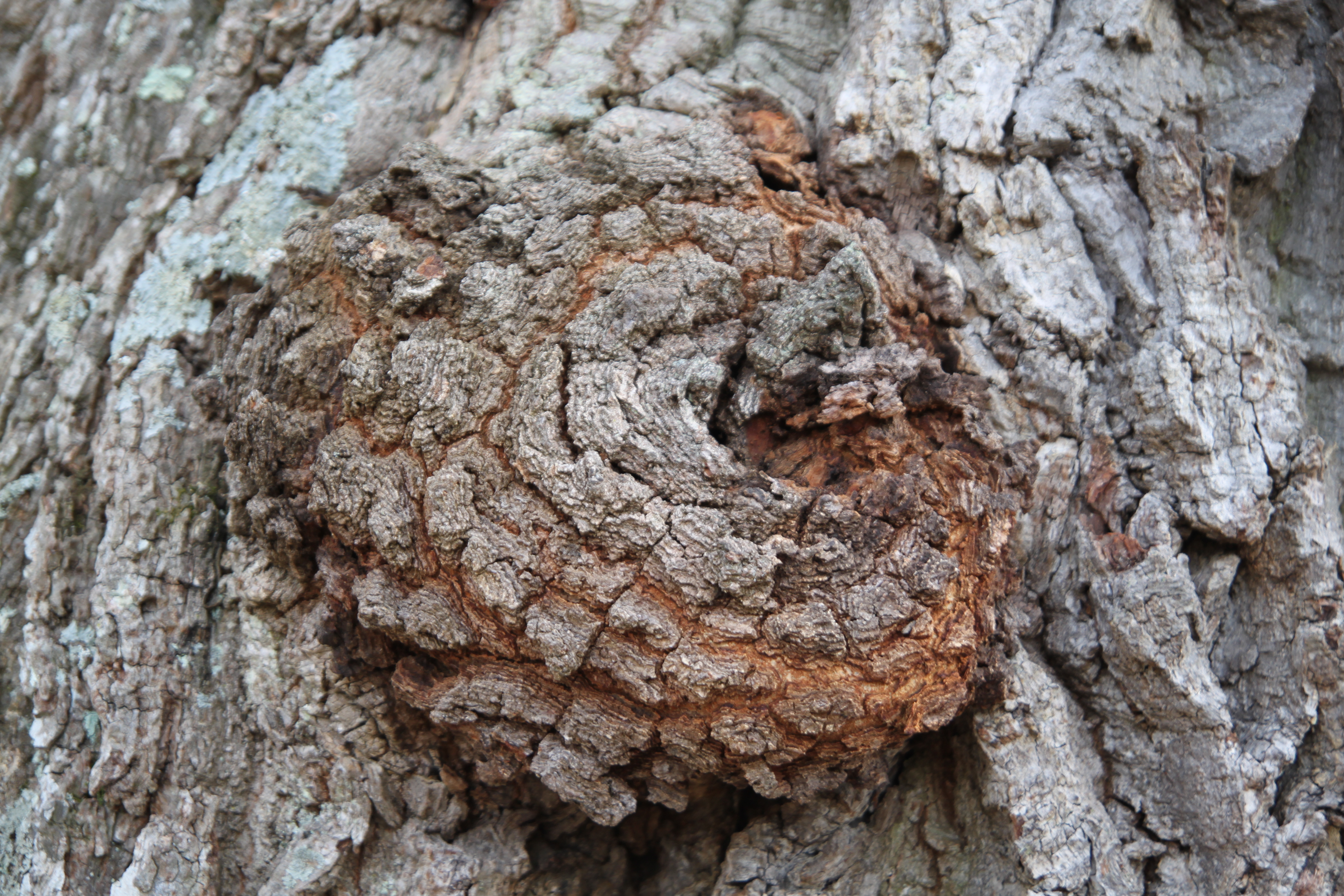
Winter woods expose many details otherwise obscured by foliage. One of nature’s wonders made more visible are burls. With just a slightly more involved glance into the woods you start to see these tree bumps frequently. You may know burls are treasured by woodworkers for the interesting patterns revealed when shaped by lathe then sanded and shined to a lustrous finish. There is a monstrous burl high up in a tree on my way to work. Each day I observe it with admiration and wonder. As we hike through the woods, friends and family ask: “What caused that?”, “Will the tree survive if you cut it off?”
“Before you leave the house, look in the mirror and take one thing off.” ~ Coco Chanel
Accessories. I like the whole idea of them. Bracelets, earrings, hats, snazzy shoes, purses. I have a sister who has a scarf for every occasion, and another sister with equally significant sunglass options from which to choose for any given moment. But my fascination with accessories stops at admiration. I do collect tiny stud earrings (usually horticultural in nature) made in whatever place I travel, but I rarely change from the tiny leaves that adorn my earlobes daily. Though I lean to the austere, I admire those who manage to put together combinations of clothes and accessories that tell the world who they are. I admire people who wear their personalities, regardless of what the world thinks. Folks who own whatever runway the world throws at them that day.
On a recent visit to the southeast, the Live Oaks (Quercus virginiana) caught my attention. Though they were immense and old, stately and sinuous, it was not those features that captured my attention. It was their accessories.
Monkey Puzzle Tree (Araucaria araucana) is NOT a Pine Tree
According to my dad all cats are girls and all dogs are boys. That’s just the way it is. Every cat is a ‘she’ and every dog is a ‘he’. Of course for many years we had a male cat and a female dog, but that didn’t matter. My dad doesn’t seem to be alone in this sentiment. My father-in-law ex-father-in-law also always refers to dogs in the masculine and cats in the feminine.
Something similar happens at this time of the year. As people start searching for their Christmas trees, often they refer to every Christmas-tree shaped object in the lot and in the woods as a pine tree. Just like all cats are not girls and all dogs are not boys, all evergreens are not pine trees.
I’ve heard and read that when you thru-hike the Appalachian Trail, trail magic happens. This is the “kindness of strangers” that happens on the trail. Someone gives a hiker a lift to a dry shelter on a rainy day or leaves some delicious snack in a shelter for a weary hiker to find, that’s magic. I have only heard and read about this and that is likely all I’ll ever do. Though the idea of thru-hiking the Appalachian Trail is appealing to me, I would never be able to do it. Well, I could do it, but it would take me 432,567 days because I would be stopping to look at every flower and bud, taking pictures of each leaf and nifty pattern and talking to anyone who will listen about the wonder of the plants around. (Think I’m exaggerating? Just talk with ANYONE who’s ever hiked with me!)
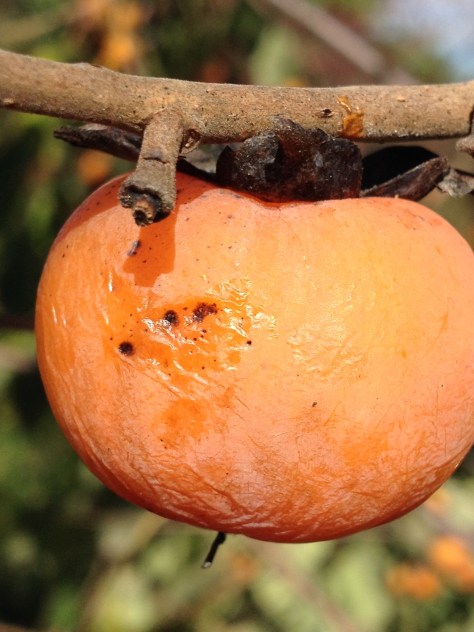
Ouch! That was definitely an acorn that just hit me on the head. There seems to be a bumper crop of them falling from our trees this year. When a slight breeze blows it sounds like hail falling through the trees. THUNK! A black walnut hits the top of the car as I cruise along River Road taking in the fall colors and noting Delaware River water levels (low). Holy moly was that loud and a little bit scary! No dents (in my head or in the car) but all of this fruit flinging has gotten me thinking about the purpose of fall.
Turns out that there are other reasons for fruits to fall from the trees than providing ammunition for you to throw at your younger (though similar sized – I’ll have you know) sibling. The autumn colors signal to many of us winter is on the way. It’s time to split the rest of the firewood, dig out the long sleeves and extra blankets and find the snow shovel underneath the accumulation of beach chairs and coolers that piled up this summer. Similarly, for wildlife, the changing of the leaves signals a bounty to be eaten and preserved for the cold winter months.
Think about the small red fruits of a dogwood or spicebush, they would be tough to see from a bird’s location high above, and it would take a lot of energy to stop at each tree to figure out if there were ripe fruits to eat. Instead, birds can keep an eye out for the changing of the colors, an entire tree full of red leaves signals to those flying above ripe fruits to be had, fuel for continuing the long migration or fattening up to make it through a (hopefully) snowy winter.
As I explore various places this fall I take a look at the fruits, and the trees from which they fell, and consider their purpose and value.
Seward Johnson’s Sculpture “Down to Earth” Grounds for Sculpture – Hamilton, NJ
Grounds for Sculpture and Sayen House and Gardens
One of my most favorite trees (and contrary to popular belief they are not ALL my favorites) is the Katsura Tree (Cercidiphyllum japonicum). Typically I focus on native plants and their role in our ecosystem and place in plant communities. I like to explore faunal associations and examine their potential for ornamental use. This tree, native to Japan, captures all of my attention because of its fragrance. Katsuras don’t emit their perfume when flowering like most trees do. Katsura give off the most wonderfully sweet fragrance just before their leaves start to change into their apricot splendor of autumn. The scent is distinctive enough that you will smell it before you even see a Katsura and just know one is around, somewhere.
Fall is my favorite season. We are so lucky here in the Northeast and Mid-Atlantic that we get to experience the changing of the seasons through riotous colors thrown together painting hillsides, roadways and mountaintops. As I look out my window Red Oak (Quercus rubra) leaves are just starting to show the crimson they are known for and the cat-faced shaped leaves of Tulip Trees (Liriodendron tulipifera) are turning golden. The only thing that makes this show better is the addition of fragrance and that’s where Katsura comes in.
I, accidentally, timed my visit to Grounds for Sculpture just perfectly for a stunning sensory experience. The place is loaded with Katsura trees and they were all alerting their presence on the breeze. Sculptures you can get up close to and touch, ornamental gardens and Katsura perfume in the air. I was in heaven. A little early for fall color, but if there was fall color, there wouldn’t have been any perfume on the wind. Some compare the scent to cotton candy, others liken it to brown sugar or a cake baking. In fact, according to Michael Dosmann, curator of living collections at the Arnold Arboretum in Boston, “Germans call this tree ‘kuchenbaum,’ which translates to ‘cake tree’.”
The heart-shaped leaves of Katsura
Typical form of Katsura.
Peeking through the Wisteria tunnel finding a mom reading to her child under a Katsura. Sculpture by Seward Johnson.
Bloom of Seaside Goldenrod (Solidago sempervirens)
“Oh sweetie, not you, what are you doing here?”
said the security guard behind the desk in the campus security office. It is the night before graduation and I am being escorted with my then boyfriend, now husband ex-husband, by local police into the security office for on-campus drinking.
The fact that we are both of-age and the campus wasn’t a dry campus when we both started school (I mean shouldn’t there be a grandfather clause?) and that we didn’t even have anything to drink (honestly!) – we were leaving campus – cooler in tow – for an off-campus party – doesn’t mean anything to these uniformed fellas. I am trying to keep calm and tell the officer that in fact I WILL be graduating tomorrow regardless of what he thinks. He’s telling me I am not going to walk. This is the first time I have been in trouble at college (unless you count the whole outdoor holiday lights inside the dorm debacle) in the 4 years I have been there, and it is the next to last day of school.
The reason the security guard was so surprised to see me was because the only time I’ve been in that small structure was to buy my parking pass. My relationship was fairly new at the time, but I was fairly sure this was not his first run-in with security. A few hours and a confiscated cooler later, (they decided we weren’t doing anything wrong after-all) we’re allowed to go and I graduated the next day. If it hadn’t been for the company I was keeping, would I have been in that situation? Probably not, I probably would’ve been reading a book somewhere quiet. But I also wouldn’t have had nearly as much fun, met as many terrific people or had stories to tell.
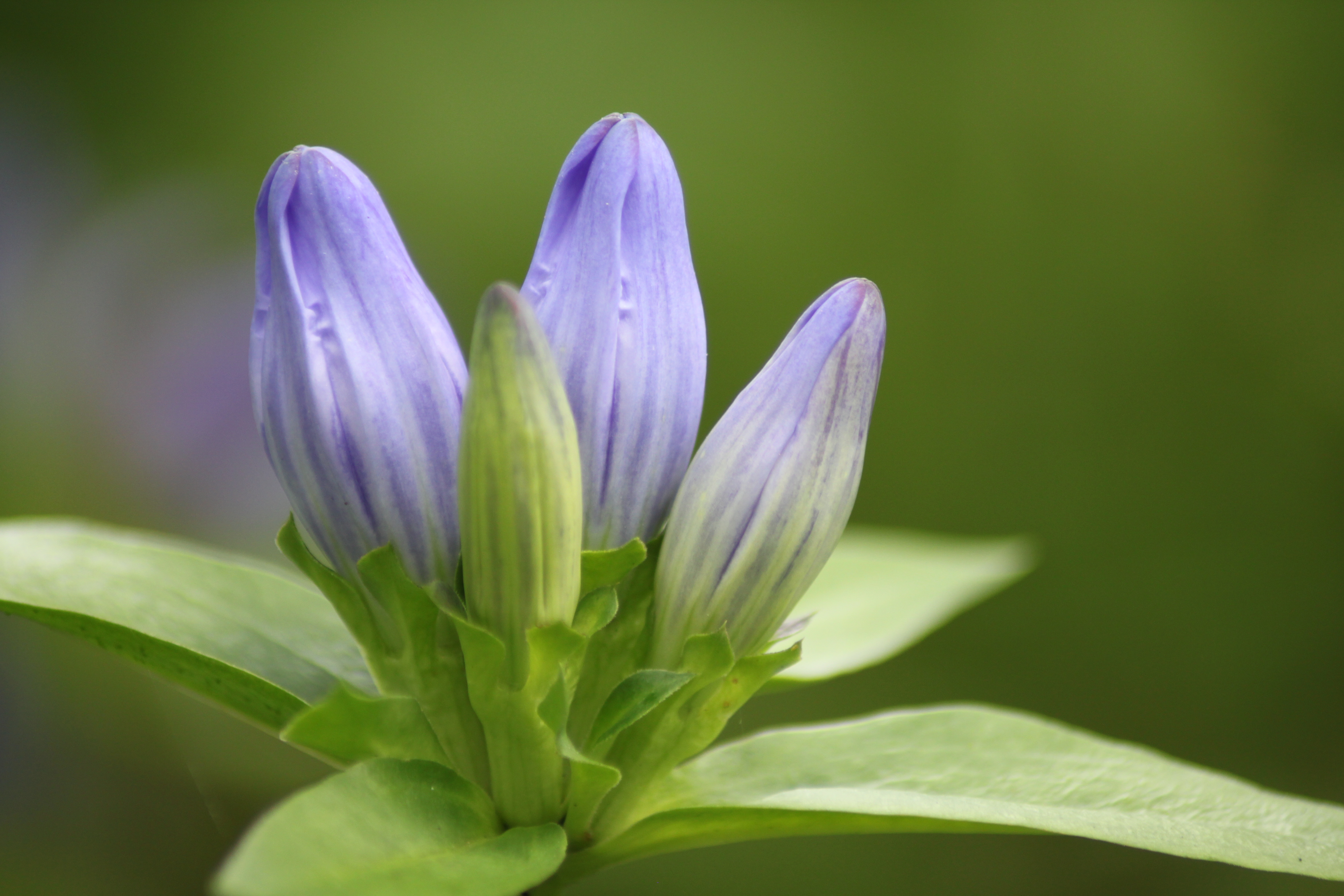
Flower colors can range from pale purple to deep sapphire depending on age, light, time of day.
It’s hard enough for me to get my kayak down a whitewater river upright without being distracted by flowers along the way. I am happy to say on my latest voyage, it was not the blooms that tripped me up but my own inexperience. (I’m still learning the basics when it comes to whitewater kayaking and as the two River Zen Masters in my life constantly remind me “Kayaking is what you do between swims”… it is my own mantra now.)
Paddling with other horticulturally-minded people means extra time on the water, paddling back upstream to get a closer look at the flowers along the bank. This trip was no exception. Today’s distraction – Closed Gentians. I don’t know if it is the seeming simplicity of these flowers, the intense color or their apparent rarity that makes me stop (or paddle back upstream) to look at them, closely, and for a while, every time I see them. This day these were blooming along with White Turtleheads (Chelone glabra), and Red Cardinal Flower (Lobelia cardinals).
Headed to shore for a water-side botanical exploration
Closed Gentians along the banks of the Lehigh River
These would have been inundated the week before during a large water release.. Here you seem them with Sensitive Ferns, Violets and thalictrum









 HORT travels