All posts by kvsalisbury

Transition

img_5143
The late afternoon autumn sun setting over a meadow. At this time autumn is beginning to look wintery.

“Kaaaaaaaaaaaaaaaathy!!!!” my sister would yell across the 2 1/2 pine barrens acres we called a playground growing up. This bellow could easily take the tone of joy or anger. We often yelled across the yard to each other and, in the silence of the rural pinelands, I am sure the neighbors heard our calls too. When we would do this within ear shot of my dad he would find us and remind us that we had “two legs and one mouth which means you can walk twice as far as you can yell.” I am not ashamed to say I have used this exact same phrase with students and interns in the past. Seems logical to me.

Just the other day I took a gentle walk along my favorite rail trail and instead of having a goal of miles or a time to beat or number of steps to worry about, I ventured on this day with the specific intention of using my two legs and just looking.

img_5130
The sun highlights a swath of goldenrod seedheads. Insects and mammals alike will find refuge here, protection from winter winds and snow. Birds find nourishment here in the fluffy seeds.

There have been a lot of words lately, an overwhelming amount of opinions and facts, love words and hate words and one word that keeps popping up: transition. Of course this realization of transition of political leadership coincides with the transition of seasons from fall to winter. It occurred to me, in addition to having two legs, I have two eyes. This means, by my father’s logic, I can see twice as much as I can say. So I decided to quietly witness this transition of fall to winter, during this time of transition for the country and, if I am going to be honest here, during personal transition of my own. Remembering with every dormancy theres comes a rebirth, after every winter follows a joyous spring, that autumn leaves provide the nourishment for next year’s wonderment, and that winter snow sustains us all.

So what follows are some snapshots of my small wander through transition, acknowledging we all are transitioning all the time; sometimes in small ways, sometimes in ways we have never imagined. Remembering none of this is permanent and if we stop talking and start looking, seeing, we will find the beauty and potential in the change.

Continue reading Transition

Portillo and Valparaiso Chile

img_0737
No tree to be found around the Chilean resort of Portillo – the Cruise Ship of the Andes.

“Portillo crazy – that’s what they call it here”, said a new found friend at a tiny bar in Portillo Chile. A bunch of us, some new friends some old friends but now all friends, were sitting around a table, the center of which has a giant plate of meat and all of us were drinking a local beer. We had been taking runs all day and were currently the only folks in this local hangout, which would soon be filled with resort employees, laughter, good music and lots of dancing.

We are in Chile for an August snowboarding trip. For someone like me, not such a fan of the hot humid summers around here, finding snow in August and being able to ride on it in South America was a dream come true. When our new friend was describing Portillo crazy, he noted with exasperation that when things are getting frustrating around the resort, he works the registration desk there, there isn’t even a tree you can go sit under; there is no green and that certainly contributes to the Portillo crazy.

Continue reading Portillo and Valparaiso Chile

Plants that Rock


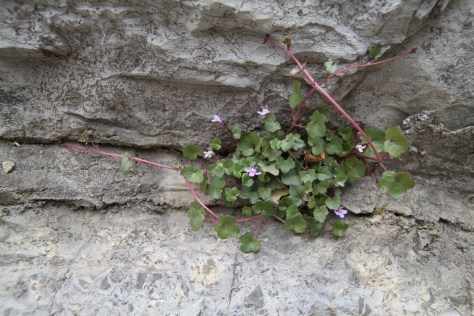
IMG_6172
Mystery (to me) plant growing from an old stone wall in historic Harpers Ferry West Virginia.

Succession. A short, terse word for something so fascinating and beautiful in nature. Though it sounds a bit harsh, you are clued into its ecological meaning by looking at the first part of the word – success.

Sure this word has uses outside of the natural world – some things happen in succession and businesses and boards plan for leadership succession, but the ecological definition of succession is this: the process by which a biological community evolves over time.

This may happen slowly over eons or within a lifetime or maybe even within a generation depending on the place and the community. And sometimes it occurs in the most seemingly lifeless locations.

There are three lessons I take away, or think about, each time I see a plant growing, thriving, flowering in what seems an impossible location.

Continue reading Plants that Rock

Bouquets with Benefits in the Netherlands


IMG_3314
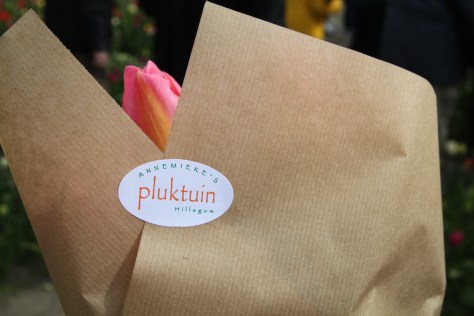
Pick-Your-Own Bouquet

Plants around here are just starting their slow, groggy awakening. Tiny green tips of daffodil leaves are poking through the duff. Crocus, winter aconite and snowdrops are blooming. Buds on red maples are swelling and new signs of the next season can be found each day. This has me thinking again of the trip to Holland and Belgium we took last Spring. Small colorful flowers coupled with the recent passing of Valentine’s Day has me remembering a small tulip farm having an incredible influence on the community.

IMG_3284

Annemiekes Pluktuin is a small tulip farm located in Hillegom, Netherlands (a town that once hosted the Beatles as they recorded a television show and features a Henry Ford Museum). Hillegom is in the western Netherlands and is part of the “Dune and Bulb Region (Duin- en Bollenstreek)” of the country. This area boasts coastal dunes and is where many of the flower bulbs the Netherlands are so famous for are cultivated.  So it makes sense that Annemieke has her bulb farm here.

IMG_3313
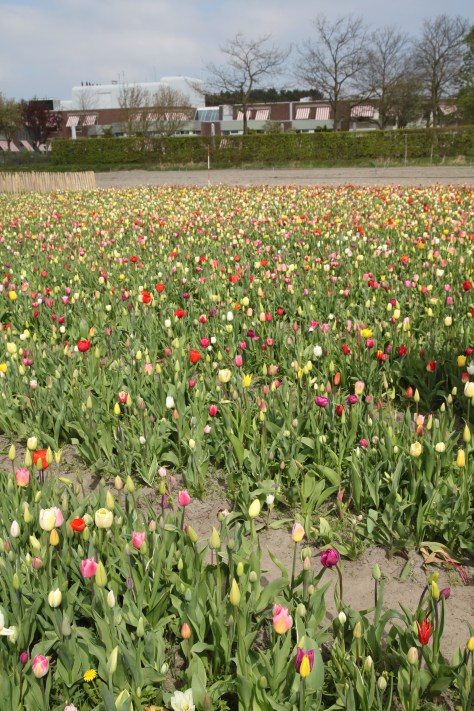
Each season the bulbs in the Pick-Your-Own fields are changed.

She and her husband guided us through her facility and tulip fields. They began the garden in 2009 after noting a lack of picking gardens in the area once so famous for its tulip cultivation (many of the tulip fields have given way to development in the region). Pluktuins are “Picking Gardens”, places where a visitor can go and pick their own bouquets of flowers. There are many around the country, catering to the tourism industry as well as residents looking for cut flowers for their homes. While the idea of a picking garden in Holland is not unique, certainly you can find them dotting the country, Annemieke’s is special.

Continue reading Bouquets with Benefits in the Netherlands

Defense

“No matter how intently one studies the hundred little dramas of the woods and meadows, one can never learn all the salient facts about any one of them.”

― Aldo Leopold, A Sand County Almanac and Sketches Here and There

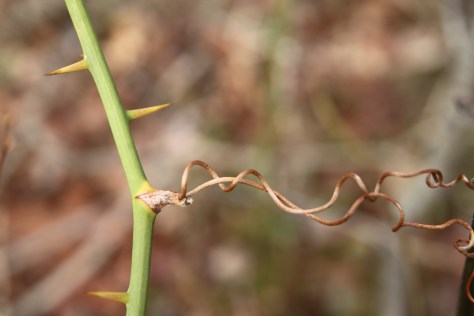
green briar
Prickles and tendrils of our native Greenbriar (Smilax rotundifolia) along the Appalachian Trail on the way to the Pinnacle.

With the many types of media that surround us, the goings-on around the world filter into the everyday, and sometimes the every moment. Heartache and heartwarming happens with stories of how humans decide to interact with the world and people around them. Rarely do stories making the news include tales of people-plant interactions, yet these stories happen every day as well. Each second plants are interacting with the world around them whether it is with animals, humans (we are animals, yes?) fungi, or other plants they are constantly on the defense. Sort of like people lately, it seems.

Unlike people, plants cannot just get up and remove themselves from a situation (makes me wonder since people CAN do that, why don’t we do that more often?). But just like people, plants have developed a variety of ways to protect themselves from harm. And other residents in nature have found ways to exploit these defenses for their own survival.

Continue reading Defense

Belfleurken in Belgium

Photo (c) K V Salisbury
Colorful Azaleas are the primary product at Belfleurken

Depending on where you are maybe not so much a road trip as a flight or sail. Belfleurken is an azalea grower in Belgium. Their primary market is Europe so we do not see many of their azaleas here in the US. We were there a bit early for the Mother’s Day rush on greenhouse grown potted azaleas so while there were many plants in production, not too many flowers were to be found.

Photo (c) K V Salisbury & HORTravels
Just some of the 5 acres of azaleas under glass.

This family business is known for the one-million azaleas grown each year in state-of-the-art greenhouses and their self-watering flower pots. In some way it was nice not to be distracted by 5 acres of Azalea flowers under glass giving a chance to notice the other features of this greenhouse facility. Because the greenhouses were not full, we could see the inner-workings of the facility and for a greenhouse nut like me – this was heaven.

Continue reading Belfleurken in Belgium

“Hortisculpture”

Frog at Morris Arboretum
“American Bull” by Lorraine Vail at the Morris Arboretum, Philadelphia PA
While I tend to find the fall colors of the native trees and shrubs here in the Northeast and Mid-Atlantic region something I cannot live without and something that makes me endlessly happy and at peace, others see the changing colors as the sure sign that winter is coming. They can’t enjoy the autumn display because all of those falling leaves depressingly morph into falling snowflakes as they watch them twirl down from the canopy.

As fall proceeds into its second month some lament the end of the growing season, putting away gloves and cleaning tools. Seed catalogs and garden magazines are piled up next to the couch for winter reading. People start to prepare for winter hibernation.

When it is time to sculpt pumpkins, people tend to think less about gardens and gardening as the changing of seasons leads us to think less about watering and weeds and more about turkey stuffing and present wrapping.

Turkey at Gray Towers Milford, PA
Turkey at Grey Towers Milford, PA
But for those of us who enjoy the seasons, who want to explore wherever and whenever, I encourage fall and winter visits to gardens. Perhaps you have a friend or loved one who isn’t so much into gardening but likes to get outside. Drag them to a public garden or museum with outdoor sculptures. You as a gardener, or plant admirer, or nature admirer will find sculptures that will fill the gardening void in the fall and winter months. Some of my favorites from my horticulture travels are here.

Continue reading “Hortisculpture”

Fiction-ish

The demure Scarlet Pimpernel

Around here it is summer and the Scarlet Pimpernels (Anagallis arvensis) are blooming. To many the Scarlet Pimpernel is a novel set in the time of the French Revolution. To me the Scarlet Pimpernel is a sweet little orange flower that occurs in lawns and some have the nerve to call a weed.

The petite scarlet pimpernel is an European native that made its way here as an ornamental. Dainty orange flowers with red centers dot the square-stemmed plant in summer. Found in disturbed sites and waste areas, this plant thrives in poor soils. First named by English Botanist Richard Salisbury (No relation that I have found…yet – but I mean there MUST be right?) this annual is also known as Poor Man’s Weatherglass because of its tendency to close its flowers at the “approach of foul weather” (Manual of Cultivated Plants, L.H.Bailey 1949). The Reader’s Digest Field Guide to Wildflowers also notes that this botanical barometer closes at dusk, fails to open in gloomy weather and responds to rising humidity by closing its flowers.

Summer is also the time of book lists for beach reading. While I don’t generally go to the beach and read, I will have to add The Scarlet Pimpernel to my “to be read pile” (why is it that that pile never shrinks?) simply because it is named after a plant, not because it has anything to do with plants. There are some books out there I have come across and found even more enjoyable than I expected because of their unanticipated horticultural content.

As you may remember from previous posts, I am a Stephen King fan. When I was much younger my face was always stuck squarely in a Stephen King novel. At some point, as I grew older and picked my head up long enough to realize there are other authors and other genres out there, and as I became more and more interested in learning about the natural world around me, I decided to vary my reading selections. I decided I would read one non-fiction book for each fiction book I read. Naturally, I began my non-fiction reading with Stephen King’s On WritingThis memoir/guide to writing drew me into the non-fiction world and I am hooked. I used to think reading non-fiction was the equivalent of reading a textbook for fun, and really…textbooks for fun?

Scarlet Pimpernel Flower

Continue reading Fiction-ish

Caterpillary

Sawtooth Oak (Quercus acutissima) flowers in Spring. Scott Arboretum, Swarthmore College PA

Everywhere I go people are sneezing.  Spring seemed to happen all at once and the pollen from everything is coating cars, pavement and, apparently, nostrils in a dusky green film.  Funny how people lament the late start to spring wondering where all the flowers are and then almost as soon as they show their cheerful colors people are wishing the blooms banished from the face of the earth.

It is true in the earliest weeks of spring there can be a lull in blooms. It is the time when the crystal magic of winter has passed but the jewel tones of spring haven’t yet exploded onto the scene. People are desperate for something that shows life will go on. This is when it is important to get out and look for the details. Once you start looking closer you start to notice the beauty in the subtle details of leaves emerging and of flowers that don’t need any extra attention.

Of course by now that lull has passed. Virginia bluebells, violets, trilliums and marsh marigolds are all but screaming their presence in their showy way. Plants with catkins remain quiet and subtle, letting the showoffs attract the pollinators – who needs them?! And until the pollen starts blowing in the wind no one notices them.

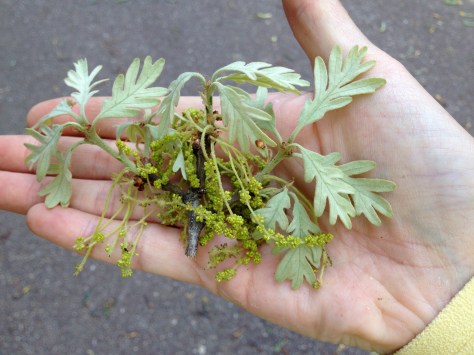
Catkins are wind-pollinated flowers. Catkins have emerged on the oak trees around here right now and many many people experience nostril distress with all this pollen floating in the air. Just like Ragweed, these flowers aren’t showy. They don’t need to be. They can reproduce every time the wind blows (I think I know some people like that…) Showy flowers are showy because they need to attract pollinators. Catkins are strictly functional, unless you are desperately looking for signs of spring and then they become quite lovely in their unique caterpillary way.

White Oak (Quercus alba) catkins and newly emerging leaves.

Continue reading Caterpillary

A Unique Relationship

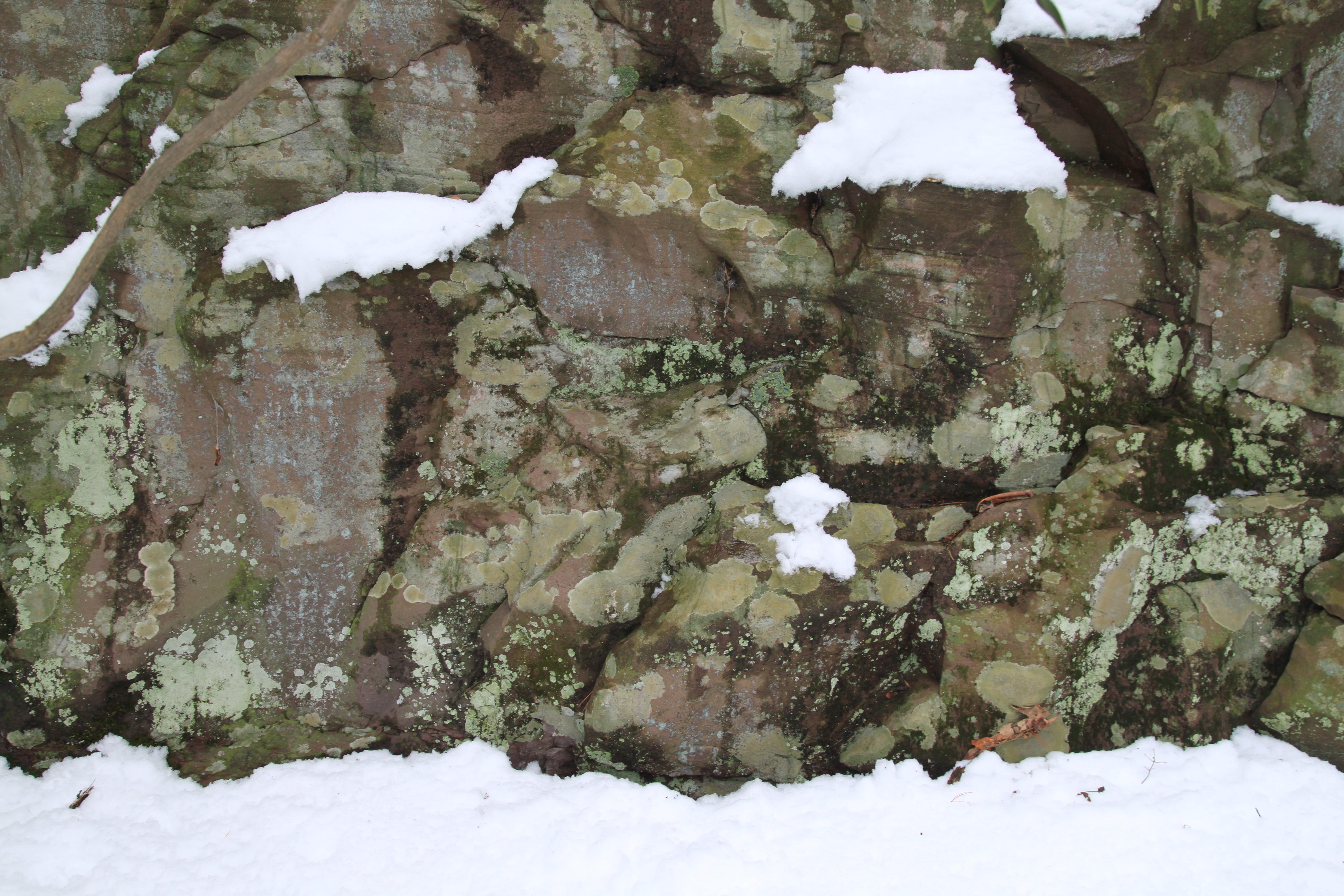
Snow and Lichens in Tuscarora State Park PA
Snow and Lichens cover a boulder in Tuscarora State Park, PA

Seems as though spring is taking a bit longer to sprung. As I write this temperatures are dipping into the twenties. Though the tried and true late winter/early spring bloomers are slowly and cautiously making  an appearance there is still barely a sign of green bud or yellow flower around.

This is when I get antsy. Snow is gone, well, almost, snowboards have been packed away and the gardening tools have emerged. But the ground is still frozen and the soggy soil means I can’t even plant my peas yet. What is a plant person to do, sit and twiddle my thumbs until it Spring actually arrives?

Continue reading A Unique Relationship