
Seeing certain plants in the wild for the first time sticks with me. I learned plants from my jobs working in garden centers in high school and college (does anyone remember Frank’s Nursery and Crafts? This is, incidentally, the first place I ever got high – they had me, freshman college student, glueing PVC pipe together for a greenhouse irrigation system inside the greenhouse for hours, you know that purple primer and the glue, after my shift I had to sit in my car for a while breathing in clean air before I felt like I could drive – that’s what all the fuss is about – getting high? I was not impressed or interested in feeling like that again …anyway back to plants!)
Just as I remember very clearly that glue incident, I remember distinctly where I saw some of my first familiar plants in the wild. My nascent plant education was not through finding plants in the wild and learning what they are, but through working in retail garden centers, answering customers’ questions and unloading, organizing, staging, arranging, watering and maintaining plants in nursery yards. Then I learned my plants in college using our botanical garden campus as a classroom. My early plants were containerized and immature or in an artificial garden setting. Sure I knew some plants from my pine barrens childhood – oaks, pines, blueberries, black walnut, sassafras, sweet fern and bracken fern but the plants I learned as I started my education and career were mostly, in my mind, commodity sized and situated.
As I started exploring more and more, and botanizing became a hobby obsession, I began encountering those plants I used to load into the trunks of Subarus and the beds of pick-up trucks as mature specimens in the wild.
This was magical to me and so educational. Here I could see where they really want to grow, versus where I may or may not have told a customer where they would like to grow. I could see their neighbors, who they want to grow with, what types of plants thrive in similar conditions of soil type, soil moisture, sunlight and exposure.
I distinctly remember the excitement of finding my first, and only to date, wild Oakleaf Hydrangea in a Mississippi forest. My first Sweetspire growing along a tea-colored creek in my beloved Pine Barrens. My first wild Alumroot dripping off a soggy wall in a Pennsylvania preserve. These memories are indelible. (If I meet you and we have met before and it seems I cannot remember your name, please note what my limited memory storage space is filled with) Prior to these encounters, I had only known these plants as inventory.
This trip on the Susquehanna added another memory to the list.
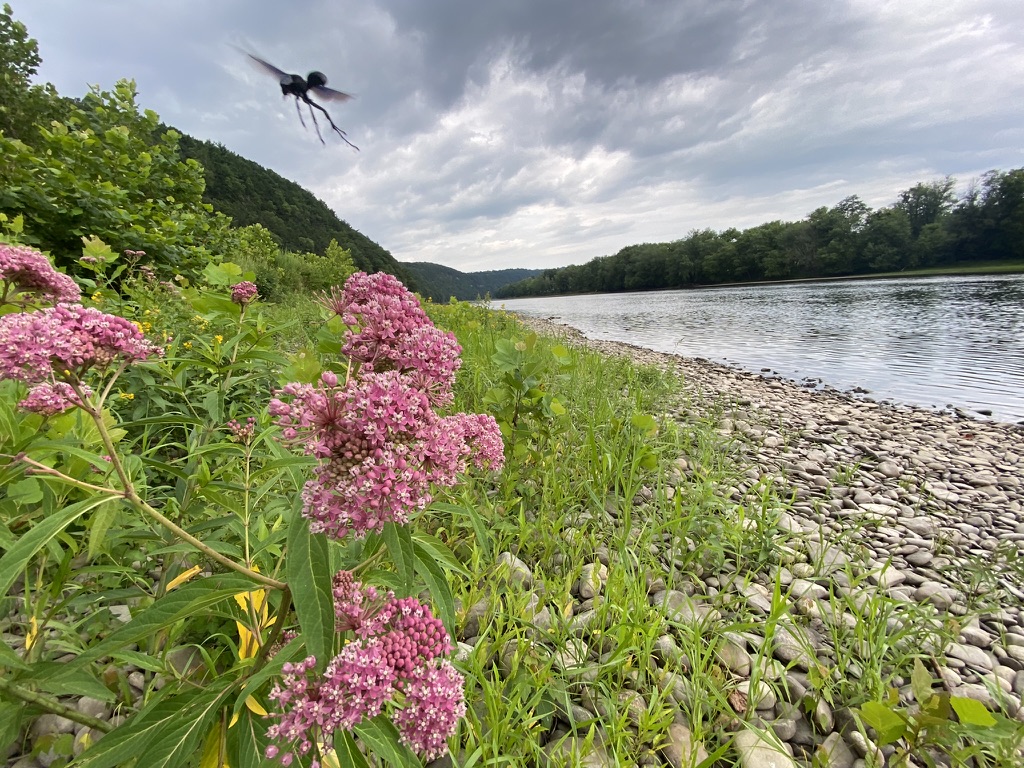
Immediately we knew this trip was going to be good for botanizing. The image above of a Swamp Milkweed on the rocky coast was a sign of exciting things to come. My paddling buddy is also a plant-nerd and it is best to botanize by boat with other people as interested as you are in plants, otherwise it is not fun for at least one of the people involved.
Plant communities you can see from a boat have the potential to be very interesting. Often, as is the case here, they are living in a scoured area. Water at flood stages will wash over the area, and ice at the edges of the water in winter scours soil and plants, moving them around a bit in the process. Plants will thrive in cracks in rocks, crevices that protect their anchoring roots from the rushing water. What you see one year may be completely or just a bit different the next depending on how cold the water was, how high the water rose or how fast it moved through the area.
Trees in these areas are there but often misshapen, compact, damaged, leaning or barely hanging on. We saw examples of this along the way, Willows and Sycamores were everywhere. Scour communities are typified by large boulders and expanses of bedrock. This is a bit different than Floodplain plant communities which have some more diversity and tend to be larger than scour communities. You may see each of these as you paddle a large river like the Susquehanna.
Old Familiars
So what did we see along the way? We saw some common plants, native, non-native and invasive:

Swamp Milkweed (Asclepias incarnata) with a Great Black Wasp (Sphex pensylvanicus)

Garden Loosestrife, Lysmachia vulgaris, an emerging invasive plant in the area.

Spotted Joe-Pye Weed (Eutrochium maculatum) among the stunted Sycamores (Platanus occidentalis)

Common Boneset (Eupatorium perfoliatum)

Canada Germander (Teucrium canadense)

Wild Mint (Mentha arvensis)
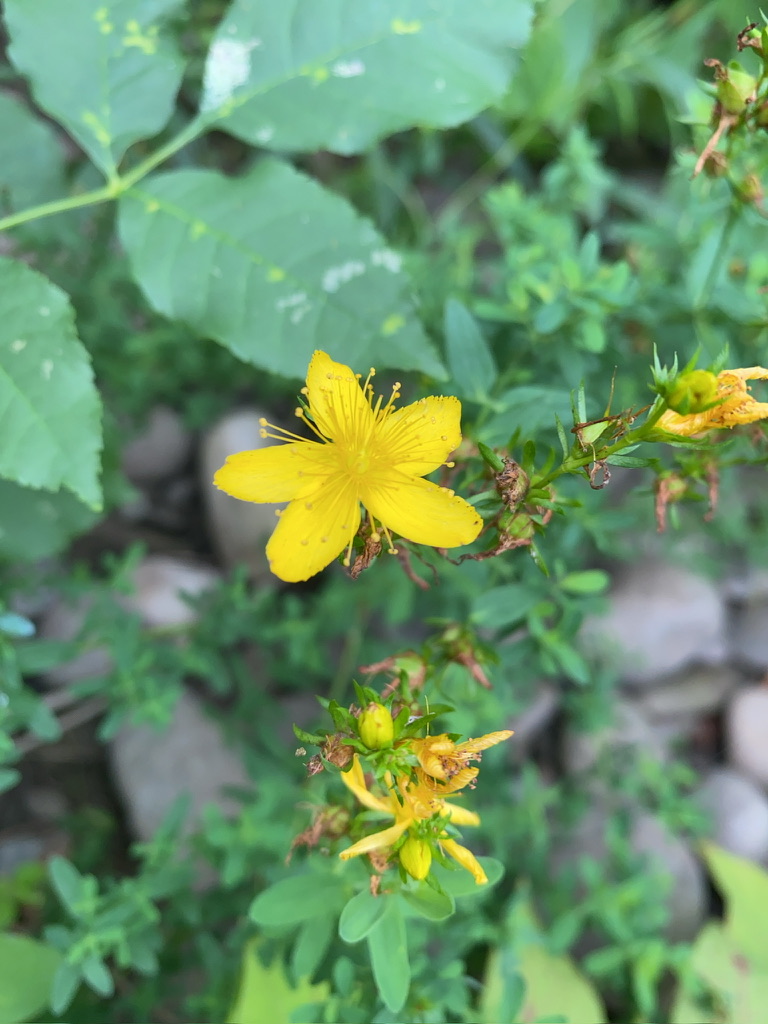
Common St. John’s Wort (Hypericum perforatum)

This not-so-great image is a zoomed in picture from very far away of Nodding Onion (Allium cernuum). These appeared in large clumps hanging from the side of a rock face along the river probably 20 feet up in the air. Seeing this changed how I think about where to plant these.

Big Bluestem (Andropogon gerardii) There is a plant community known as the Big Bluestem- Indian Grass Floodplain community. This area of the Susquehanna had many of the plants indicative of this plant community. Grass flowers are so interesting and are often overlooked.
New to Me

Flowering Rush (Butomus umbellatus) I was quite taken by this plant, it is stunning. But upon coming home and figuring out what it is, I learned it is an invasive plant and the state of Pennsylvania wants you to report it wherever you see it.
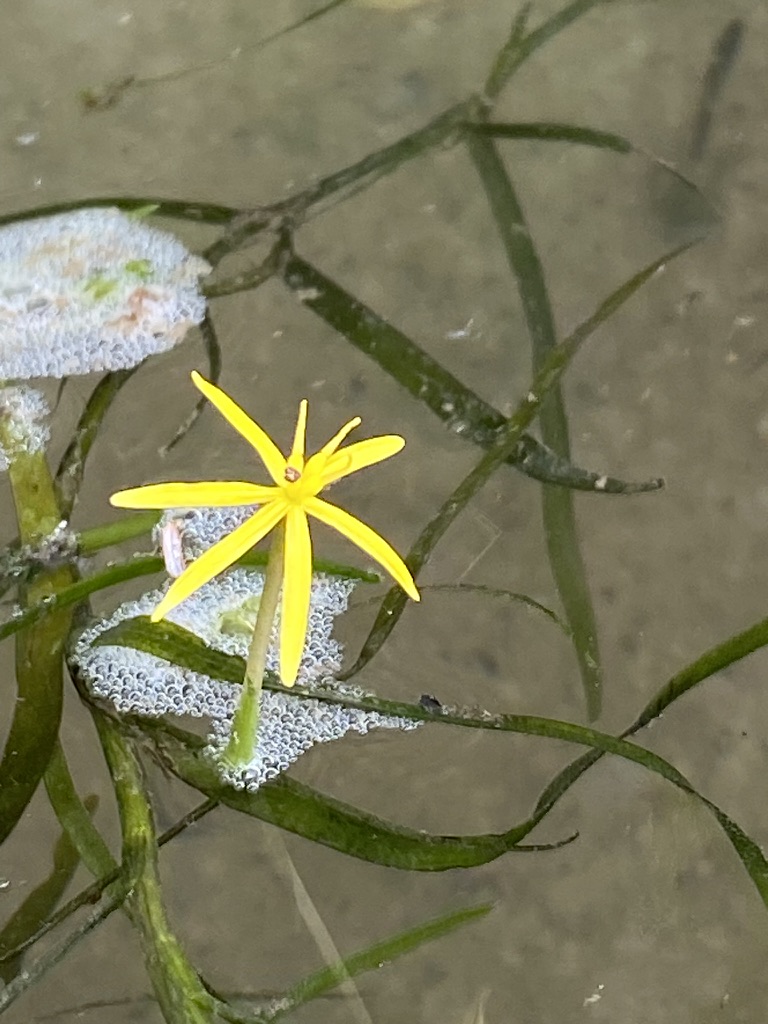
Water Star-grass (Heterenthera dubia). This plant will have these yellow flowers when closer to shore in shallow waters. In deeper water, they do not get these showy flowers but rather have cleistogamous (self-pollinating apetalous flowers) at the base of the leaves (Common Violets also get these types of flowers).
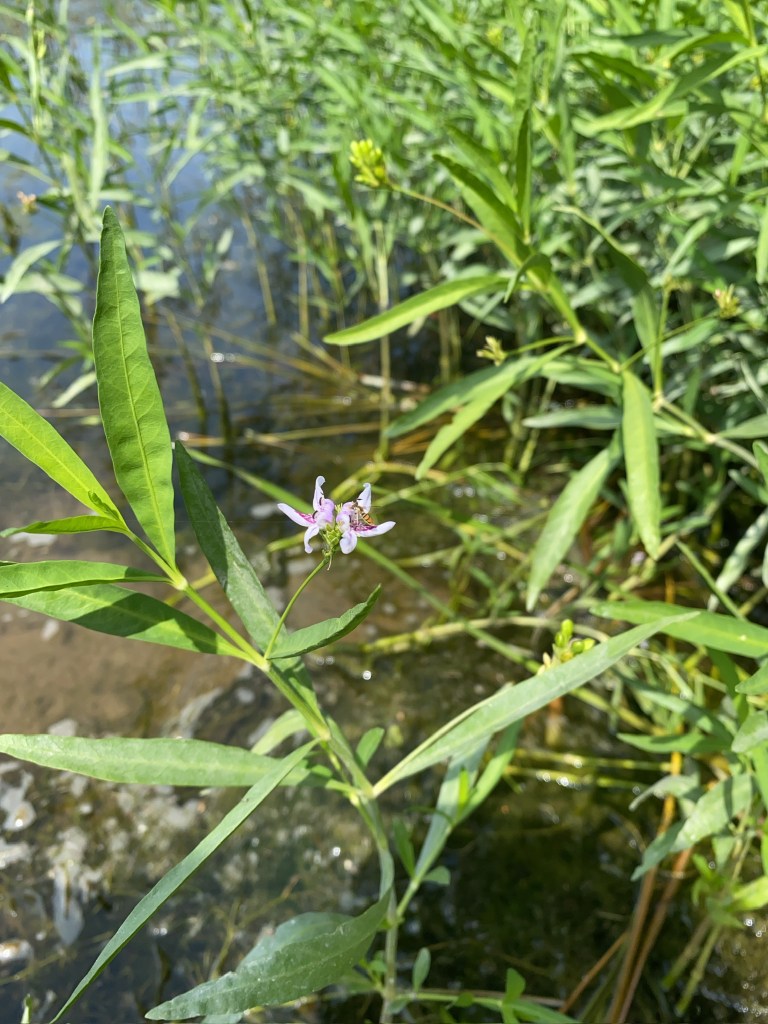
American Water Willow (Justica americana). This species has a plant community named after it. Mats of this plant often form at the head of islands in rivers in areas where their lower stems are under water year round but the tops are generally exposed except during flooding. It will help keep the gravelly river bed in place by forming rhizomatous colonies.

Redwhisker Clammyweed (Polansia dodecandra). If this looks familiar, thats because this is a cousin to the common annual – Cleome or Spider Flower. Native annuals are often overlooked for inclusion in naive gardens. It is tough to spend money on something you know will die the year you plant it, however, if you let them go to seed, they will distribute them around your garden endlessly for years to come.
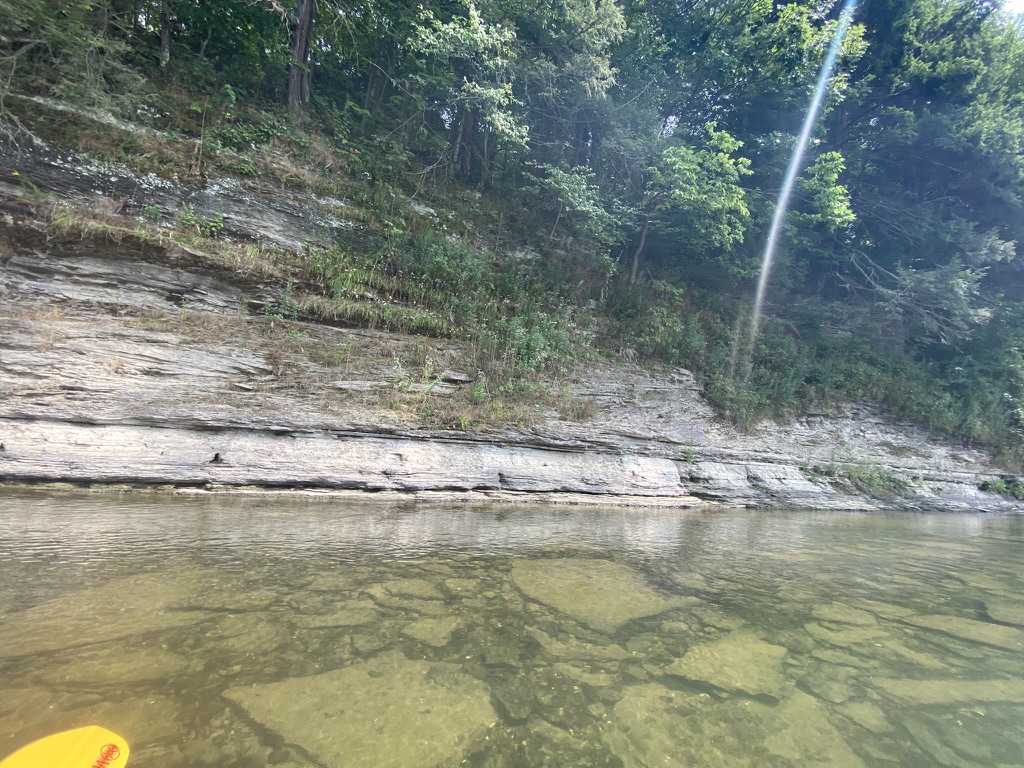
You cannot tell from this photo but in here, hanging from the cliffs along with the nodding onion is Ninebark (Physocarpus opulifolius). This is another plant I do not remember seeing in the wild before. This was a plant only known to me through the nursery trade and landscaping industry. Sure, I know it is a native and how to identify it but never in all the years of buying, selling and planting this plant did I imagine I would find it handing from a cliff along a river. Just astounding. A rock face on the Susquehanna has now been added to the list of indelible plant-related memories I have.
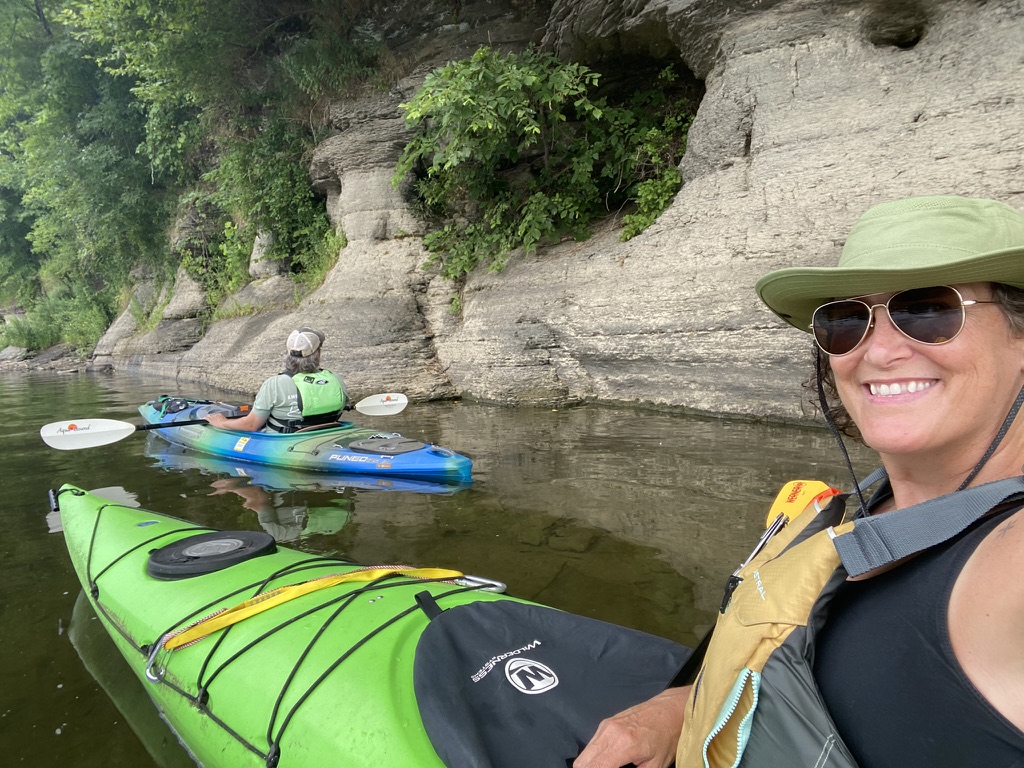
Here is what botanizing by boat looks like in action. Whether I am on water on on a trail, what is it about this activity I love? It is the excitement of finding something familiar and knowing it well and maybe learning something new about it and it is discovering something new to me, learning a new plant, understanding its miinute details to help tell it apart from others and getting to practice and hone my identification skills.
I am so incredibly grateful for the people who will tolerate this activity, because at this point it is involuntary, I see a mysterious plant I am stopping and figuring out who it is. I am lucky to have so many people in my life that will delight in the mysteries of nature right along with me.
 HORT travels