
Ailanthus altissima (Tree of Heaven) is a common tree of cities. When I talk to people about it I often mention it is the tree featured in Betty Smith’s A Tree Grows in Brooklyn. People are generally surprised to know this tree, by now a well-known invasive, is the subject of this well-loved book. Tree of heaven is ubiquitous in cities, I first became familiar with its ways in Newark, NJ and then saw it all around Philadelphia when I started working in the area. Found in nearly every vacant lot or fallow area, it is considered invasive and ecologically problematic. It is also the host plant for the troublesome spotted lanternfly. This is the weed tree of the city I am familiar with, this is not, however, the tree pictured above.
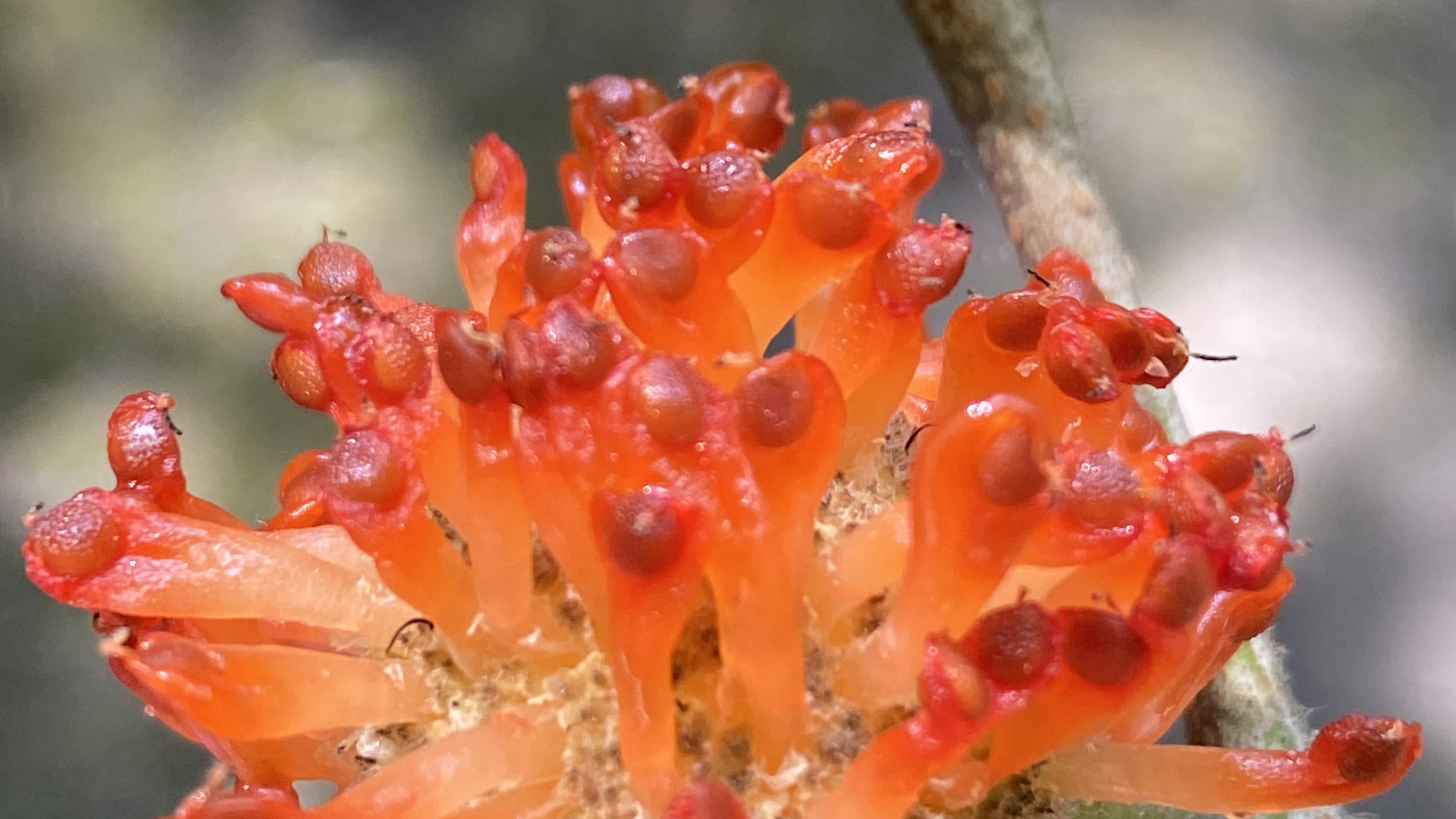
This slimy looking mass of orange is actually the fruit of a tree that, up until this point, I have never seen the flowers or fruit of before. I first identified this tree years ago in my parent’s yard in south Jersey. There were a few of them that grew quite large in an unfortunate area of the lawn. It was fairly easy to determine the plants were Paper Mulberry (Broussonetia papyrifera) given their distinctive large lobed leaves (superficially resembling sassafras in that the leaves may be mitten shaped, ghost shaped or simple ovals), milky sap and pubescent (hairy) twigs.
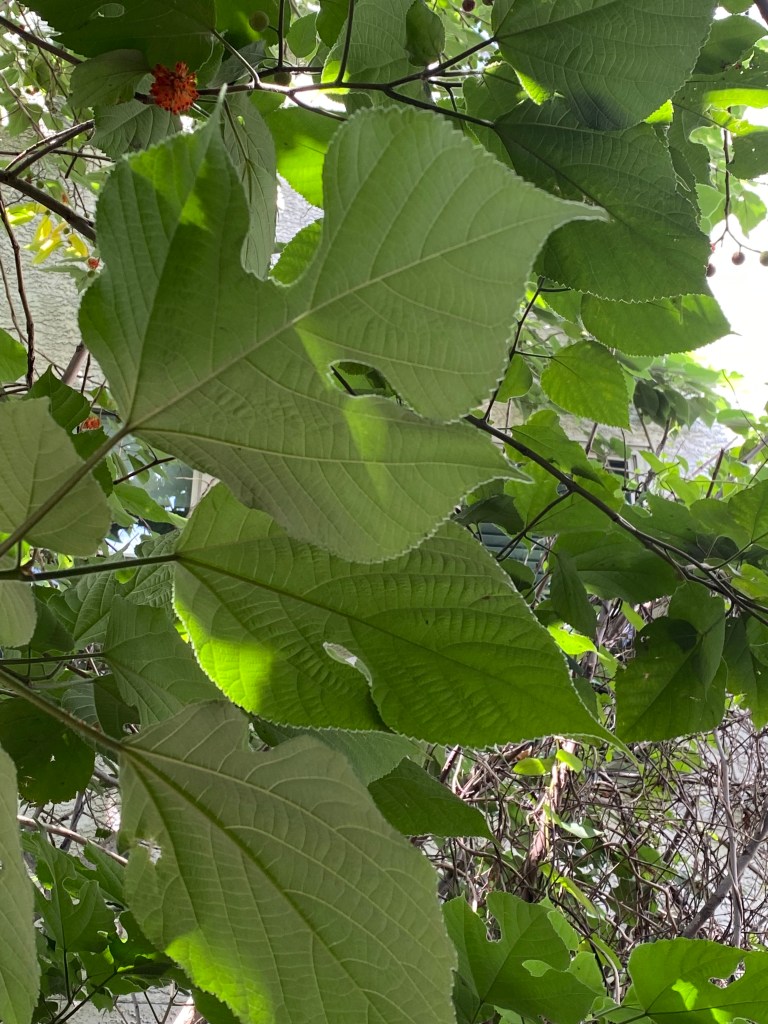
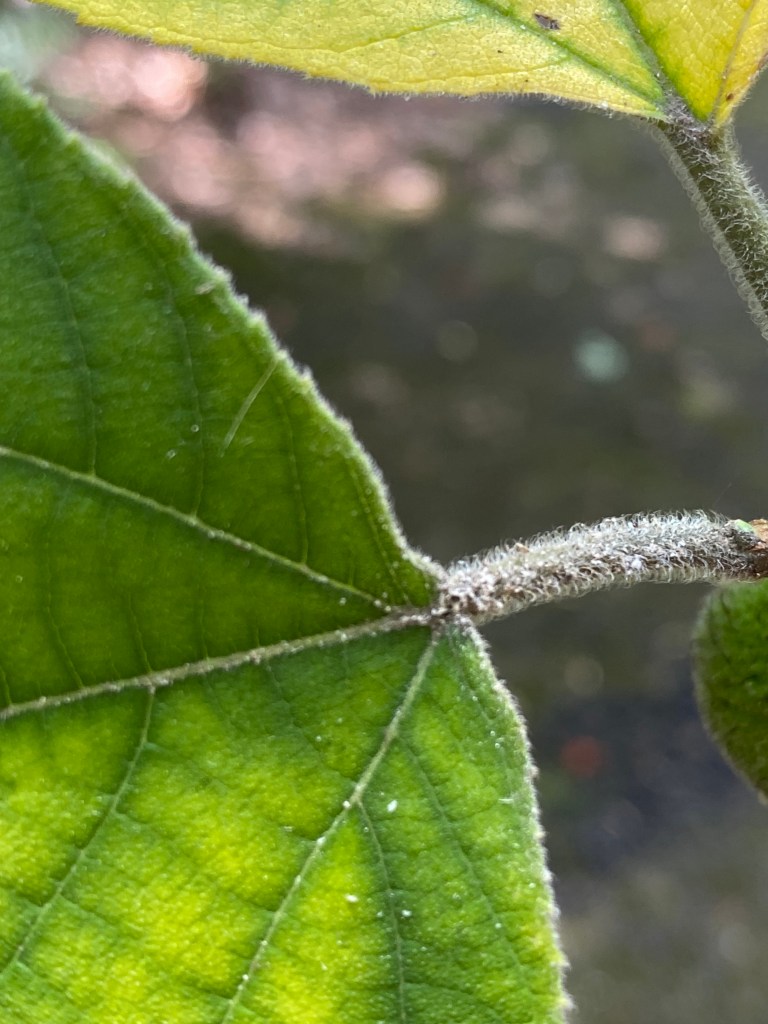
Recently, I have found myself in Philadelphia more frequently and of course in my travels notice the usual “weed trees”, tree of heaven and the empress tree (Pawlonia tomentosa). But the paper mulberry was a new one for me in the city.
Tree of Heaven was introduced to the area as an ornamental, a much needed fast-growing shade tree with great texture, by plant collector and friend to local botanists the Bartrams, William Hamilton, who had a botanical collection, the Woodlands, in Philadelphia.

The Empress tree made its way to the area as an ornamental as well. Traditionally it has been prized for the beautiful purple blooms that emerge from fuzzy tan buds prior to the leaves in spring. Pawlonia wood is also prized for carving. (In fact, some Philadelphia Empress trees were poached in the past) According to the PA Department of Conservation and Natural Resources, plantations of Pawlonia are still grown for export to Japan where the wood is highly prized for the crafting of everything from gift boxes to musical instruments.

Unlike tree of heaven and empress tree I have not seen a lot of Paper Mulberry in any of the cities I have worked in. Like the tree of heaven and the empress tree, the Paper Mulberry was introduced to the US as an ornamental, in this case as a fast growing shade tree planted throughout the southeastern United States. Also, like both of these species, this plant is also considered an invasive. This one is so prolific it is actually considered an invasive plant in more than a dozen countries. It has been spread around the world because of its bark is used to make cloth and paper by cultures around the globe. Researchers have even been looking into using the history of the movement of this plant around pacific island cultures and societies to help understand prehistoric human migration throughout Oceania, including Hawaii where this plant is considered a culturally important species.
Tapa Cloth, is used for ceremonial clothing by various indigenous cultures specific to the Pacific Islands. Once large enough the tree is harvested for its inner bark which is soaked in water and then beaten with wooden mallets until malleable and flattened and then woven together into sheets. This barkcloth, or tapa cloth is then decorated using natural dyes.
While ornamental, the fruits of this tree do not seem to be as useful as the bark. Similar to tree of heaven it is dioecious, meaning it has separate male and female plants. If you are lucky enough to have a female, rather insignificant green flowers, easily masked by the large green leaves, are followed by these spheres of orange fruits. This fruit is technically a syncarp, like the more familiar mulberry, fig or pineapple, in which the fruit developed from more than one flower which are clustered tightly together resulting in a tight cluster of individual fruits.

I think we can get caught up in vilifying plants as evil because they are causing problems in our ecosystem. I also think we forget to acknowledge that in most cases, we humans introduced them here. Yes, they cause problems in certain habitats and perhaps should be controlled, but learning the stories behind them and the connection to the wide diversity of cultures and societies we have in this country brings a little more perspective and perhaps even a bit of appreciation for these “weed trees.”
 HORT travels